What it actually takes to deliver 165,000 square feet of rooftop rubber flooring
Commercial Roofing
A look inside one of the largest commercial rubber flooring projects we've completed — and what we learned about logistics, timing, and the gap between "available" and "delivered."
FlooringInc editorial team | June 2026 | 6 min read | Commercial roofing
On a job this size — 165,000 square feet of rooftop rubber flooring — finding the right product is the easy part. The hard part is getting thousands of pounds of material exactly where it needs to be, exactly when the site is ready for it, without setting off a domino effect that throws everyone else's schedule out of line.
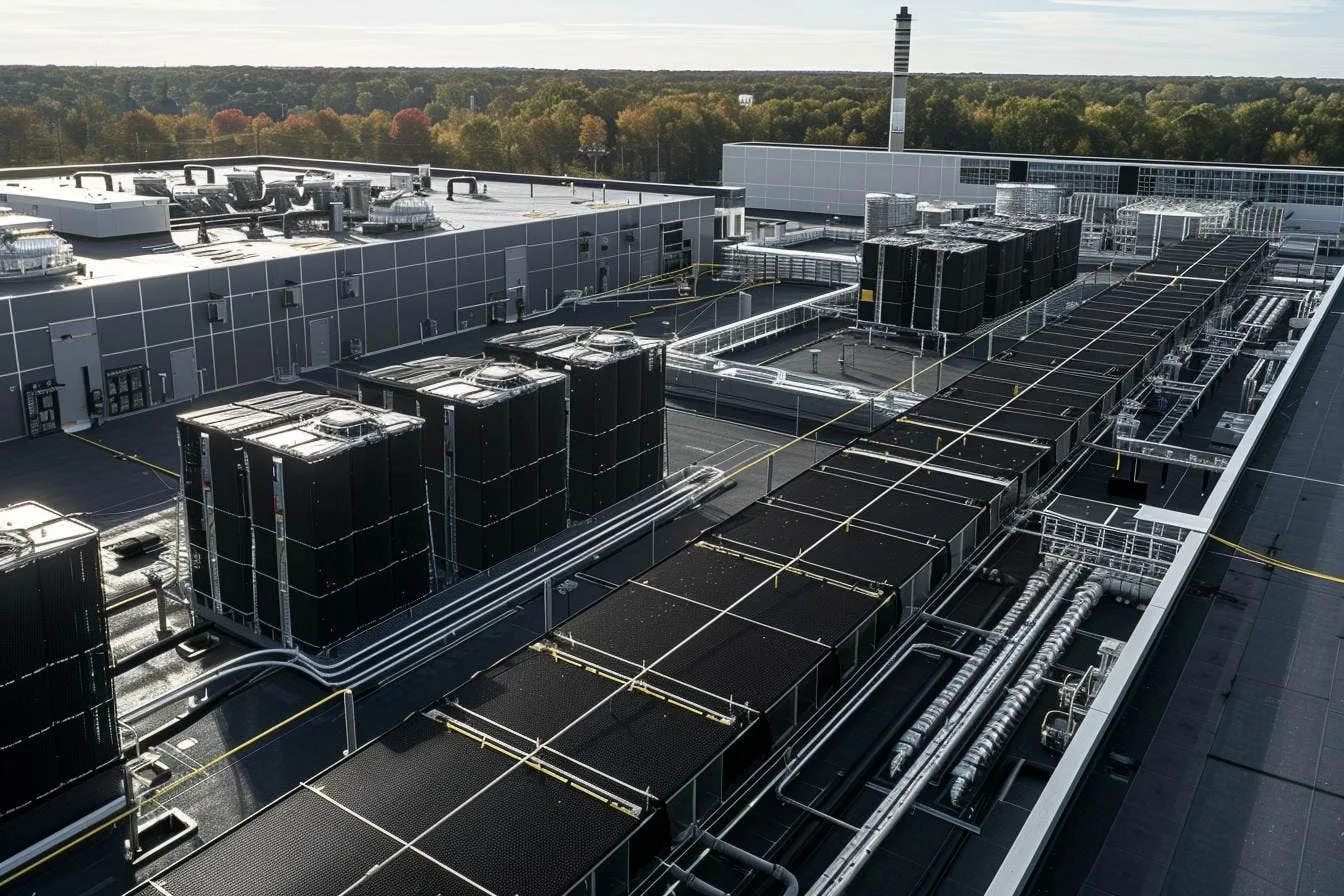
We recently worked on a large data center project that required roughly 165,000 square feet of rooftop rubber flooring. From the outside, it probably looked like a straightforward flooring order. In reality, it was a logistics operation involving multiple production facilities, phased deliveries, warehouse staging, freight coordination, crane schedules, and a whole lot of communication. This is exactly the kind of job our commercial flooring program is built for.
| 165,000 sq ftDelivered | Multi-siteProduction scheduling | PhasedCrane-tied delivery |
The Product Was Never The Problem
When the project first landed on our desk, the conversation wasn't about product specs. It was about logistics.
- Can production support the timeline?
- How many truckloads are we talking about?
- Where can material be staged?
- What's the crane schedule?
- What happens if the site can't receive a full shipment when it's ready to leave the factory?
Those are the questions that determine whether a project runs smoothly or becomes a headache for everyone involved.
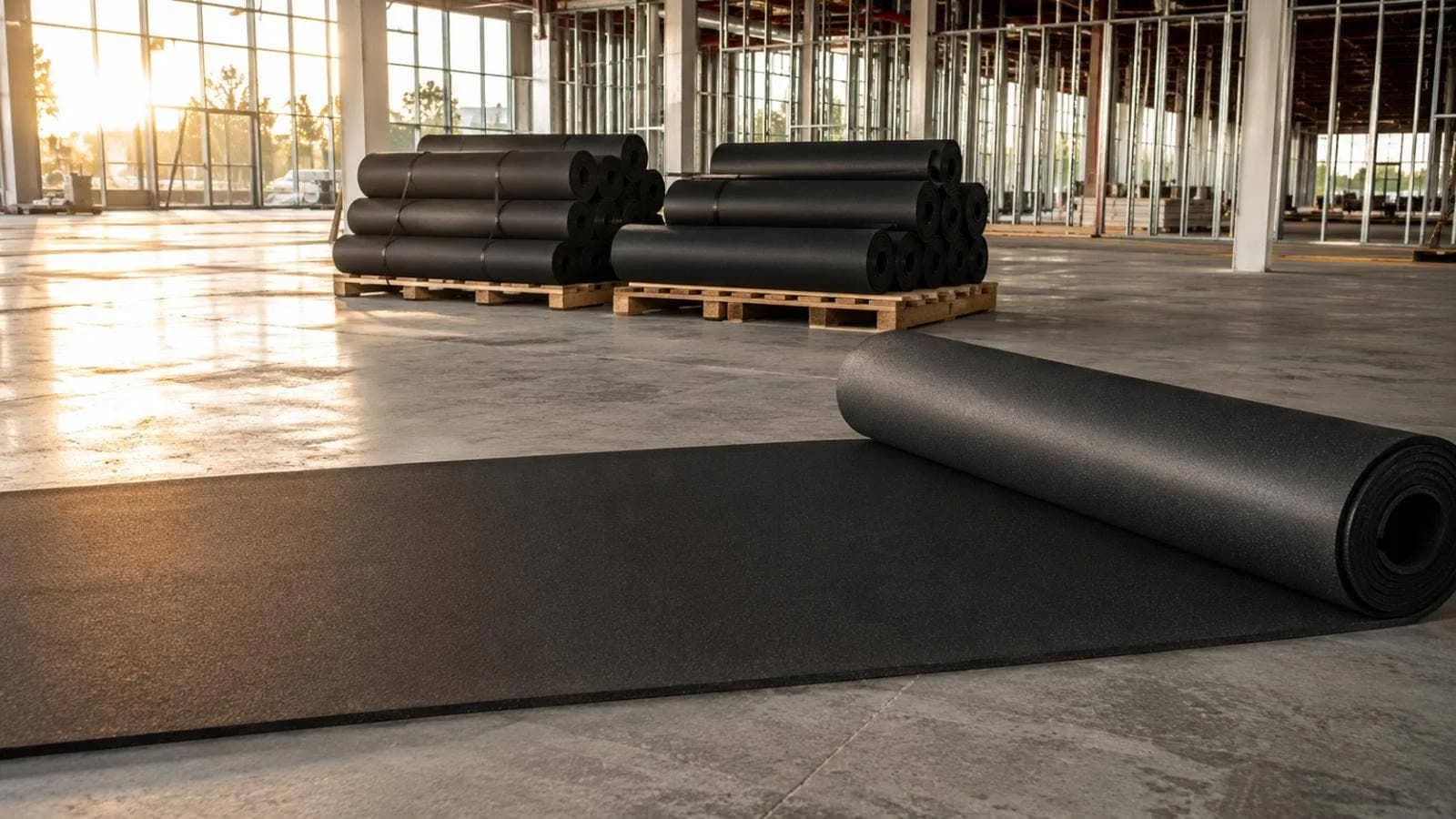
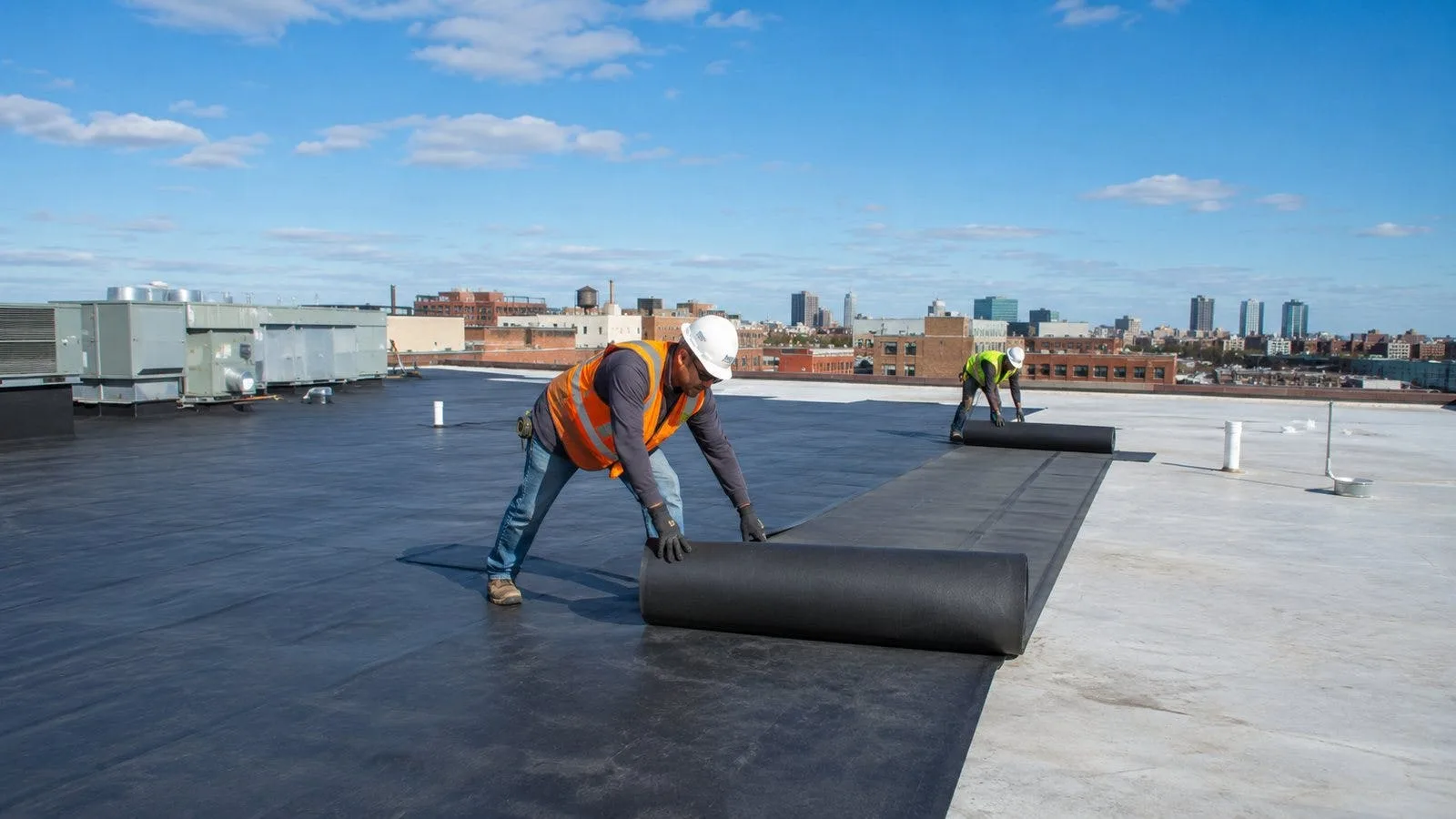
The rubber rolls themselves — our Traxxon line — are durable, impact resistant, and weather resistant, built to protect the roof and the heavy equipment that sits on it. We cut them to the contractor's exact linear footage, so there's less waste and less to manage on site, and they double as a high-traffic walkway. That part was easy.
Why Data Centers Use Rooftop Rubber Flooring
With data centers, the attention usually goes to what's happening inside the building. The rooftop is just as critical. Rooftop rubber flooring is heavy-duty rubber rolls or pads installed on a commercial roof to protect the membrane from foot traffic and equipment loads.
Large HVAC systems, cooling equipment, generators, maintenance pathways, and service areas create constant foot traffic and equipment movement. Without proper protection, that traffic can prematurely wear down roofing systems that cost hundreds of thousands of dollars to replace.
Commercial rubber flooring on a rooftop helps protect the roof membrane, improves traction, creates designated maintenance pathways, and gives technicians a safer surface to work on.
In facilities that support critical infrastructure, protecting the roof is part of protecting operations.

The Part Nobody Talks About: Delivery
Here's where most people underestimate commercial projects. Just because material is available doesn't mean it's deliverable.
We've seen projects where production was ahead of schedule but the site wasn't ready. We've seen trucks arrive only to discover crane access got pushed back. We've seen job sites that physically didn't have room to receive another truckload of material that week. You can have a full truck sitting at the gate and still have nowhere for that material to go.
Logistics planning matters as much as production planning. Because we run our own warehouse in Tennessee, we can take material in, hold it, and release it on the site's schedule instead of the factory's. On this project, several deliveries were redirected to a nearby warehouse rather than the active job site. That gave the customer flexibility while keeping production moving.
It isn't glamorous work, but it's often the difference between staying on schedule and falling behind.
"You can have a full truckload sitting at the gate and no way to get it to the roof because the crane isn't available until Thursday."
Every release involved direct coordination between our production teams, freight dispatchers, the carrier's operations team, warehouse receiving, the general contractor, and the customer's own project managers. When one piece of that shifts — and something always shifts — everyone needs to know immediately.
What "Phased Delivery" Actually Means
You'll hear the phrase phased delivery on almost every large commercial project. What it really means is someone is actively managing a lot of moving parts at the same time:
- Production schedules
- Carrier schedules
- Warehouse availability
- Site readiness
- Crane availability
- Installation progress
Those things don't stay fixed. Something changes almost every week. The goal isn't avoiding change; it's communicating quickly enough that small changes don't turn into expensive problems.
For this project, that meant staying in contact with manufacturing teams, freight carriers, warehouse staff, project managers, and site contacts throughout. When one piece moved, everybody needed to know.
What Commercial Buyers Actually Need
After working on commercial projects across a lot of different industries, one thing holds up: product selection is rarely the biggest challenge.
Whether it's a gym, school, hospital, warehouse, office building, manufacturing facility, or data center, the questions eventually become operational.
- Can deliveries be phased?
- Can inventory be staged?
- Can timelines be adjusted?
- Can freight be coordinated around site restrictions?
- Will someone pick up the phone when the schedule changes?
That's what commercial buyers are really looking for: someone who understands how projects actually run. Because once construction starts, nobody cares how good the quote looked if the material shows up on the wrong day.
Where Rubber Flooring Shows Up
Rubber flooring is specified across a wider range of commercial environments than most people expect. Here's where it shows up, and why.
| Sector | Where you'll see it | Why rubber works here |
|---|---|---|
| Fitness & Sports | Gyms, weight rooms, yoga studios, training facilities, athletic courts | Protects joints, absorbs dropped-weight impact, holds up under constant heavy use |
| Healthcare | Hospitals, clinics, rehab centers, surgical support areas | Easy to clean, quiet underfoot, slip-resistant — supports safety and a calmer environment |
| Education | Schools, classrooms, libraries, daycare centers, cafeterias | Handles high traffic, dampens noise, safer for kids with minimal upkeep |
| Commercial & Office | Offices, retail stores, lobbies, hospitality spaces, public buildings | Resilient, modern finish that performs well in busy areas |
| Industrial | Warehouses, factories, loading areas, service corridors | Tough enough for heavy equipment, chemical exposure, and demanding traffic |
| Recreational & Outdoor | Playgrounds, walkways, pool surrounds, decks, barns | Weather-tolerant, cushioning, slip-resistant where falls or moisture are a concern |
Final Thoughts
Large commercial projects rarely succeed because everything goes exactly according to plan. They succeed because the right people are paying attention when the plan changes.
This data center project wasn't memorable because of the square footage. It was memorable because it reinforced something we see every day: product is only one piece of the puzzle. The real challenge is coordinating production, freight, staging, delivery, and site readiness to keep the project moving.
Most people never see that coordination work. It's usually what matters most.
Frequently Asked Questions
What types of facilities typically need rooftop rubber flooring at this scale?
Data centers, large distribution and fulfillment centers, manufacturing plants, and other commercial facilities where the rooftop carries HVAC systems, generators, or cooling infrastructure. Any rooftop that sees regular maintenance traffic is a candidate for rooftop rubber flooring.
How do you handle deliveries when a job site can't accept full truckloads at once?
We stage material at a warehouse near the job site, receive it on our end, and release it in smaller batches as the site is ready. That keeps production running without creating congestion or storage problems on site.
Can rubber rooftop flooring be installed in phases as construction progresses?
Yes, and on large projects it often has to be. We sequence production and delivery to match installation progress rather than delivering everything at once and hoping there's somewhere to put it.
What's the lead time for a large commercial rubber flooring order?
It depends on project scope, production scheduling across facilities, and delivery requirements. Large orders like this one start with a planning conversation about logistics, crane access, and phasing, not just product. For a project of this size, start that conversation as early as possible, ideally before the roof is ready to receive material, so production and phasing can be built around your schedule.
Working on large commercial projects?
Projects at this scale need more than product availability. They need a supplier who can manage logistics in an active construction environment — the way FlooringInc handles hard commercial jobs. Let's talk through what your project requires before it gets complicated.
Tags: Commercial roofing | Data center | Rubber flooring | Freight logistics | Large format | B2B