
Veterinary Clinic Flooring

24 products
Products
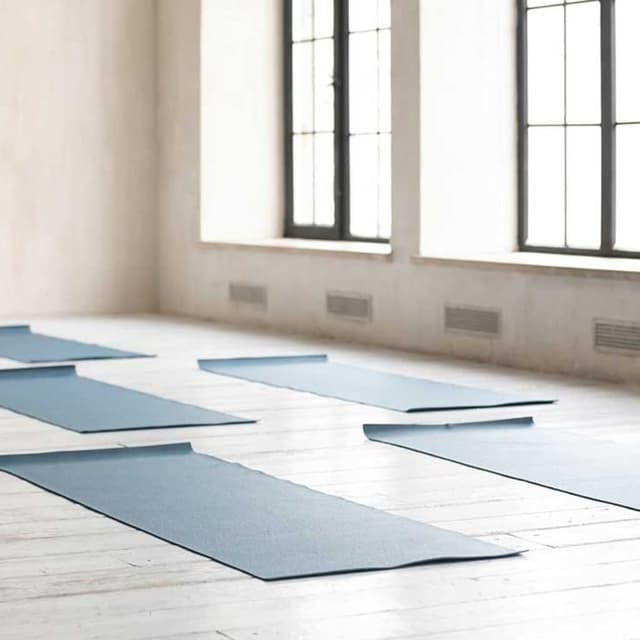
VersaRUBBER® ELITE Rubber Tile Planks
Starting From:
$9.98/sqft
$15.42Save 35%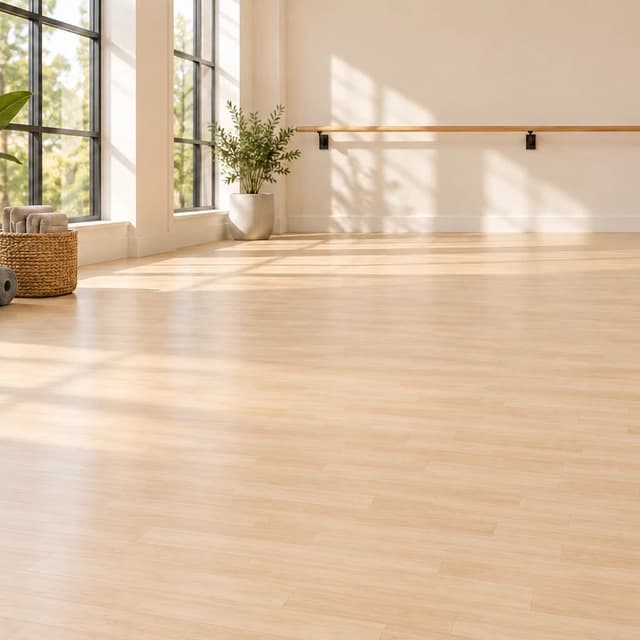
Impact Rubber Flooring Rolls - Wood Grain Vinyl Top Layer
4.9
Starting From:
$9.25/sqft
$14.23Save 35%16% Buy This
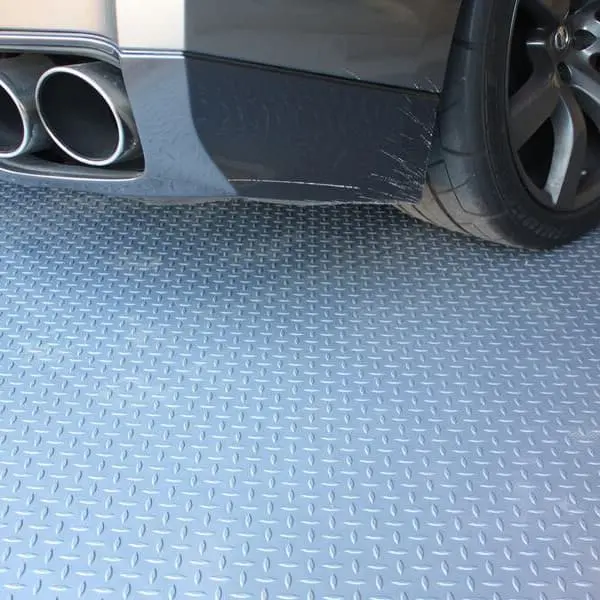

Diamond Nitro Garage Flooring Rolls - Commercial Grade
4.8
Starting From:
$2.99/sqft
$3.99Save 25%10% Buy This
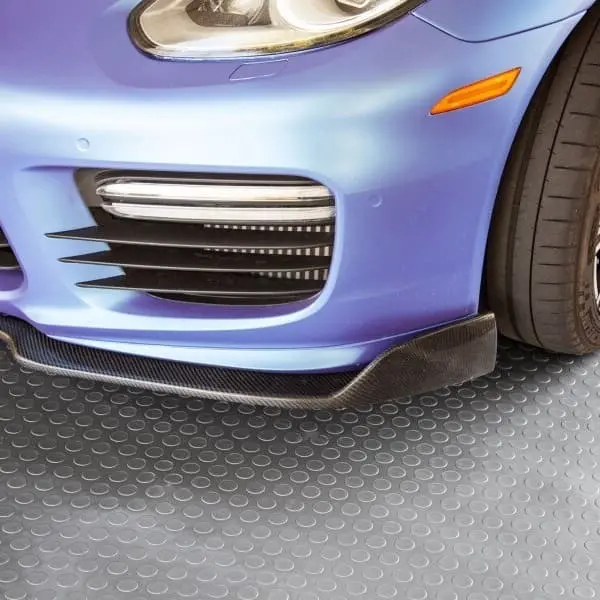
Coin Nitro Garage Flooring Rolls - Commercial Grade
4.8
Starting From:
$2.99/sqft
$3.99Save 25%30% Buy This


1/2" Premium Gym Floor Tiles – Vulcanized Rubber
4.7
Starting From:
$4.05/sqft
$6.24Save 35%14% Buy This
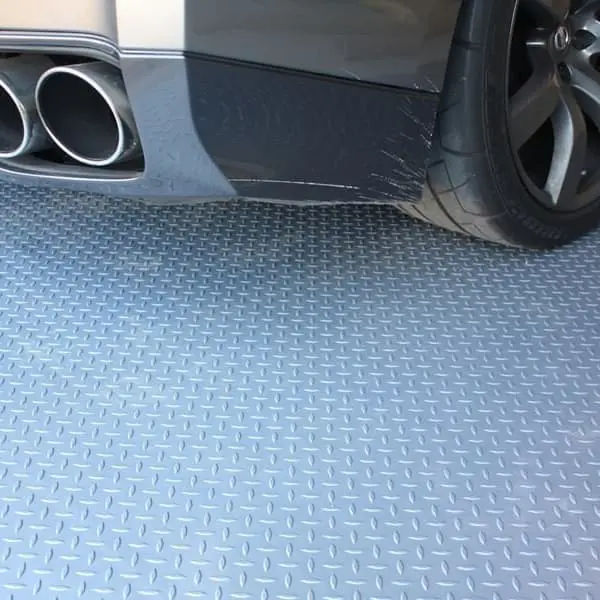
Pre-Cut Nitro Garage Flooring Rolls | Coin or Diamond - Standard & Commercial Grade
Starting From:
$1.99/sqft
$2.84Save 30%12% Buy This
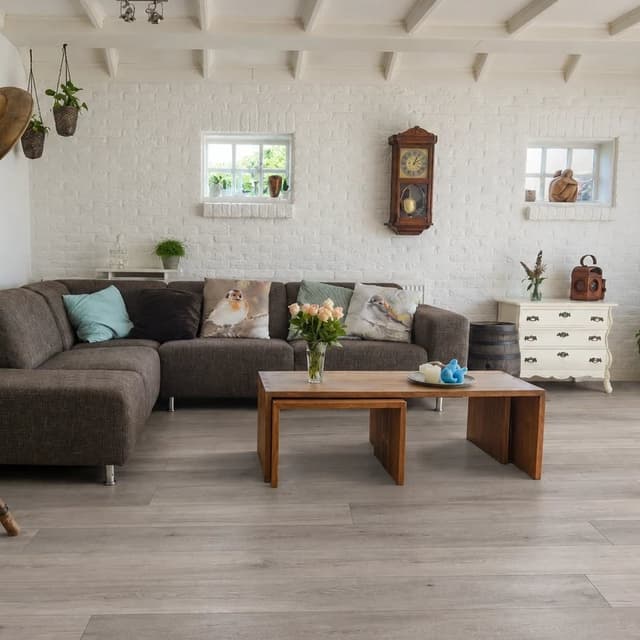

TritonCORE Pro 7" Rigid Core Vinyl Planks - Waterproof Luxury Vinyl Flooring
5.0
Starting From:
$1.99/sqft
$3.06Save 35%8% Buy This


COREtec Plus Premium 7" Waterproof Vinyl Planks - Wood Look LVP Flooring
Starting From:
$9.69/sqft
$13.79Save 30%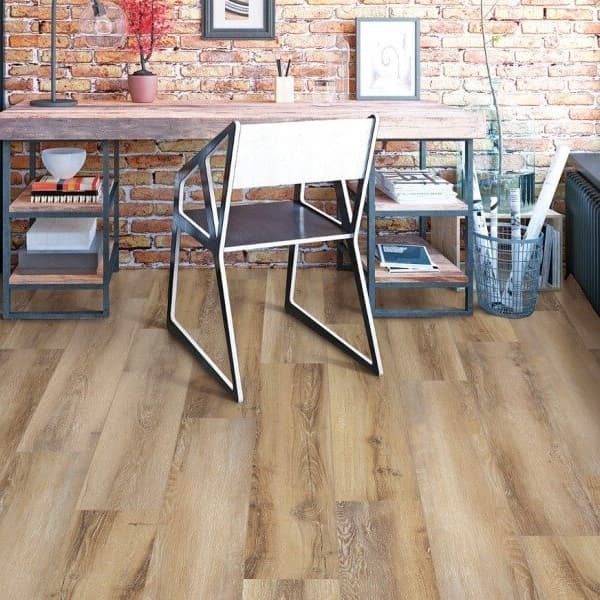
COREtec Plus Premium 9" Waterproof Vinyl Planks - LVP Wood Look Flooring
Starting From:
$9.09/sqft
$12.69Save 28%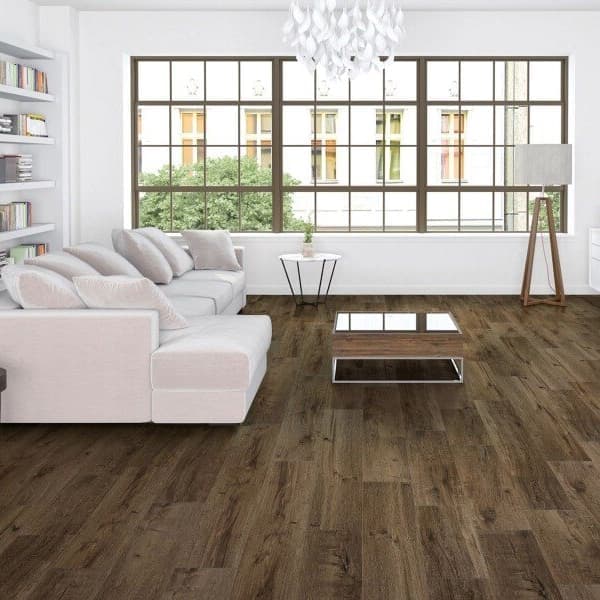
COREtec Grande Waterproof Vinyl Planks - LVP Wood Look Flooring
Starting From:
$9.59/sqft
$13.29Save 28%

Shaw In the Grain Vinyl Plank - LVP Flooring
Starting From:
$3.49/sqft
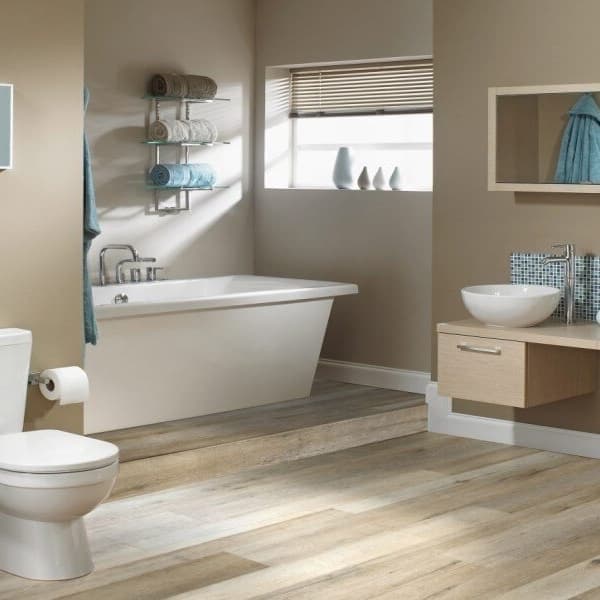
Johnson Sicily Rigid Core Vinyl Planks - Wood Look SPC Flooring
Starting From:
$6.19/sqft

Shaw Paragon Tile Plus 12" Rigid Core Vinyl Planks - Waterproof SPC Flooring
Starting From:
$6.29/sqft
$8.79Save 28%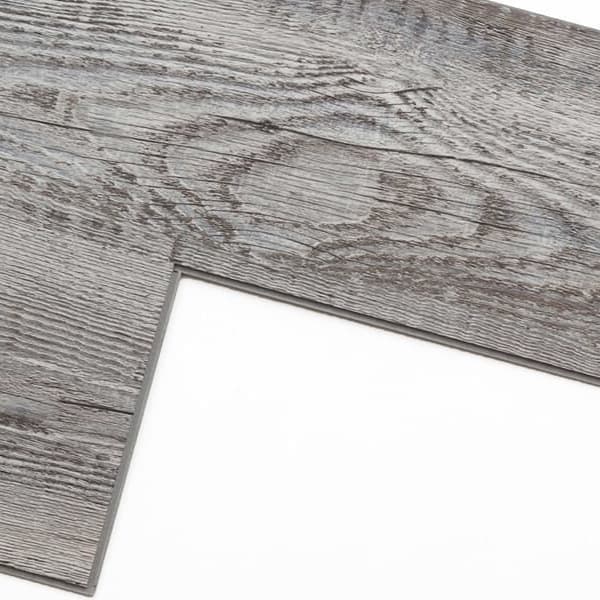
Envee 7" Rigid Core Vinyl Planks - Wood Look SPC Flooring
Starting From:
$4.49/sqft
$5.99Save 25%
Envee Tacky Back Vinyl Tiles - Self Adhesive Peel and Stick Floor Tile
5.0
Starting From:
$5.02/sqft
$6.69Save 25%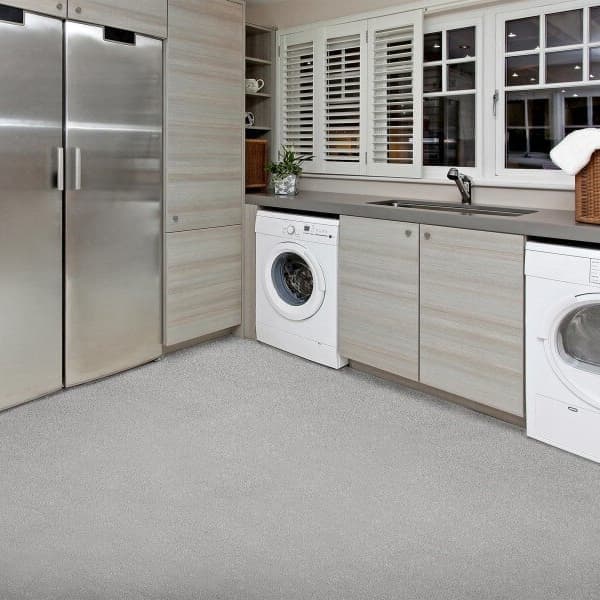

Mannington BioSpec 6'6" Vinyl Sheet - Vinyl Roll Flooring
5.0
Starting From:
$5.29/sqft

Mannington Realities II 6' Vinyl Sheet - Wood Look Sheet Vinyl Flooring
5.0
Starting From:
$5.49/sqft

Mannington Meander 6' Vinyl Sheet - Vinyl Roll Flooring
Starting From:
$5.99/sqft
$6.09Save 2%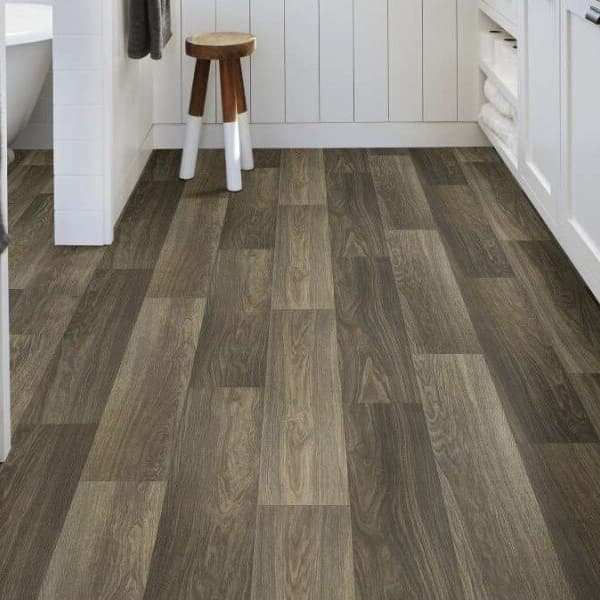
Shaw Great Basin II 12' Wide Vinyl Sheet - Wood Look Sheet Vinyl Flooring
4.0
Starting From:
$1.25/sqft
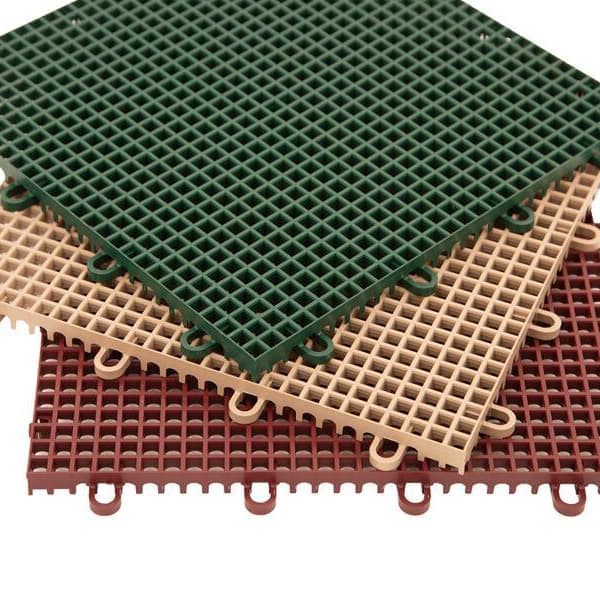
ProFlow Drainage Tiles
4.9
Starting From:
$3.51/sqft
$4.68Save 25%
Duracove 2.5" x 3.2mm x 120' Rubber Wall Base
Starting From:
$239.99/each

Rubber Floor Ramps
4.7
Starting From:
$42.99/each
$57.32Save 25%7% Buy This

Impact Wood Roll Welding Thread
Starting From:
$137.99/each
$197.13Save 30%
Polyurethane Seam Sealer
4.5
Starting From:
$34.65/each
$49.50Save 30%
About Veterinary Clinic Flooring
Every option in the American Animal Hospital Association's flooring guidance is a coating applied to your slab and left there. That framing is fine for a ground-up build and useless to a practice manager with one failed exam room and no appetite for closing it for a week. Veterinary clinic flooring still has to shed liquid rather than absorb it, hold traction while it's wet, tolerate a disinfectant protocol run several times a day, and take claws, dropped instruments and the wheels of a cage bank without opening a seam. It also has to look like a place people trust with their animals.
Miss one and you get the failure every practice manager already knows by heart. The floor starts to smell.
"Non-porous" and "impervious" aren't marketing adjectives in this vertical. They're the literal words in state veterinary codes. California's surgery-room rule (16 CCR 2030) requires floors "of a non-porous material suitable for regular disinfecting." New Jersey (N.J.A.C. 8:23A-1.1) writes the clearest definition in the country: a surface that "does not permit the absorption of fluids," that "will not retain odors," and on which fluids "bead up and run off."
The American Animal Hospital Association agrees in its public design booklet, Animal Hospital Design Strategies for Better Care: "Moisture is the number-one cause of flooring failure." Their listed top design mistake is "picking the wrong flooring for your situation."
The gap shows up in AAHA's own pros-and-cons table, which gives practices three options: painted concrete, sealed concrete, and resinous coating. Sealed concrete, in AAHA's words, "is not chemically resistant" and "is slippery when wet." Resinous coating is "completely nonporous and durable," but it "requires professional application (not a DIY flooring)."
There's no row for modular flooring. And elsewhere the same booklet warns: "Don't install flooring that will outlive the lease or that you can't take with you."
That missing fourth row is this page. Non-porous surfaces in modular formats, installed without moisture testing, shot-blasting, or cure time, that come up with you when the lease does.
Types of Veterinary Clinic Flooring
Six formats are worth your time. The right answer is usually two or three of them in different rooms, because a reception area and a bathing station fail in completely different ways.
Sealed Rubber Tile and Plank
Rubber gets recommended for clinics constantly, and usually it's the wrong rubber. You want a vulcanized product with a sealed surface, not a recycled-tire roll.
VersaRUBBER ELITE Rubber Tile Planks are the closest match we carry. The manufacturer describes the surface as "non-porous, hygienic, anti-fungal & antibacterial" and lists recycled content as none. Those claims are the manufacturer's, quoted as theirs. Double-vulcanized, 1/4", glue-down, 10-year warranty, in a wood-look plank rather than a gym mat. 1/2" Premium Gym Floor Tiles are vulcanized too, and use the word a clinic buyer needs: non-absorbent.
Our Top Recommendations:
VersaRUBBER® ELITE Rubber Tile Planks
Vinyl-Topped Rubber Rolls
This is the only product we sell that's built to become a monolithic floor.
Impact Rolls in the Wood Series put a 2mm virgin vinyl wear surface over a 5mm rubber base, 6 feet wide, free custom cut from 25 to 45 feet. The install spec is the important part: "All seams must be heat welded," using the matching welding thread, sold separately. Seams are where clinic floors fail, because a welded seam leaves no gap for urine to sit in.
Our Top Recommendations:
Impact Wood Roll Welding Thread (required, sold separately)
Solid Vinyl Rolls
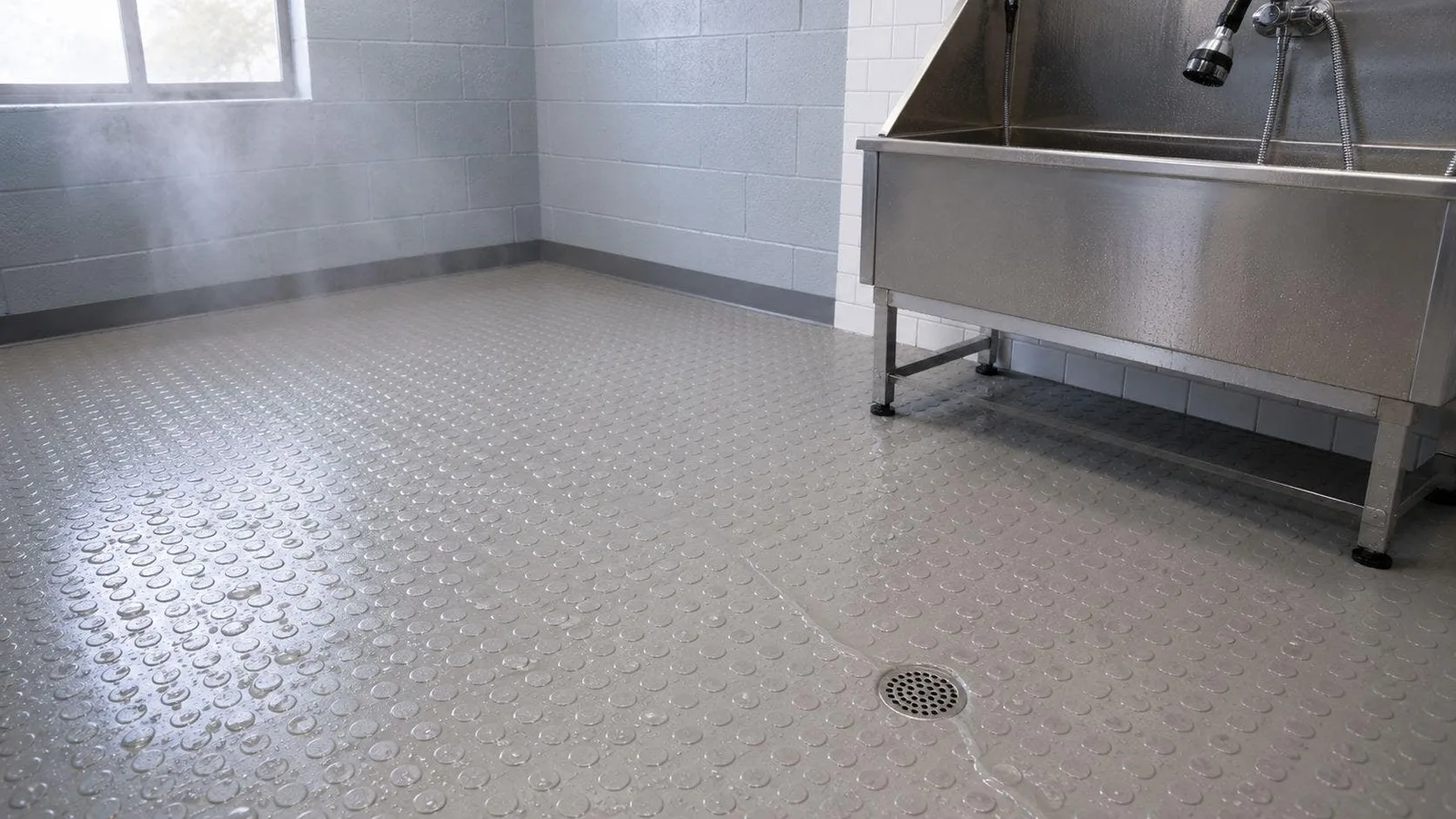
Solid vinyl is the sealed roll that doesn't need a welding crew. If urine resistant flooring is the whole reason you're shopping, this is the format to start with, because a non-porous vinyl surface gives liquid nowhere to sit.
Diamond Nitro Rolls are 100% vinyl with no absorbent layer, and the page states the material is "waterproof and will not soak in any water or allow flow through." Coin Nitro Rolls are the same construction in a coin pattern, described as "non-porous and will not allow liquid to penetrate through the floor," with more bite for a wash area. Pre-Cut Nitro Rolls are the cheapest non-porous option we stock.
Our Top Recommendations:
Rigid Core LVT and SPC Planks
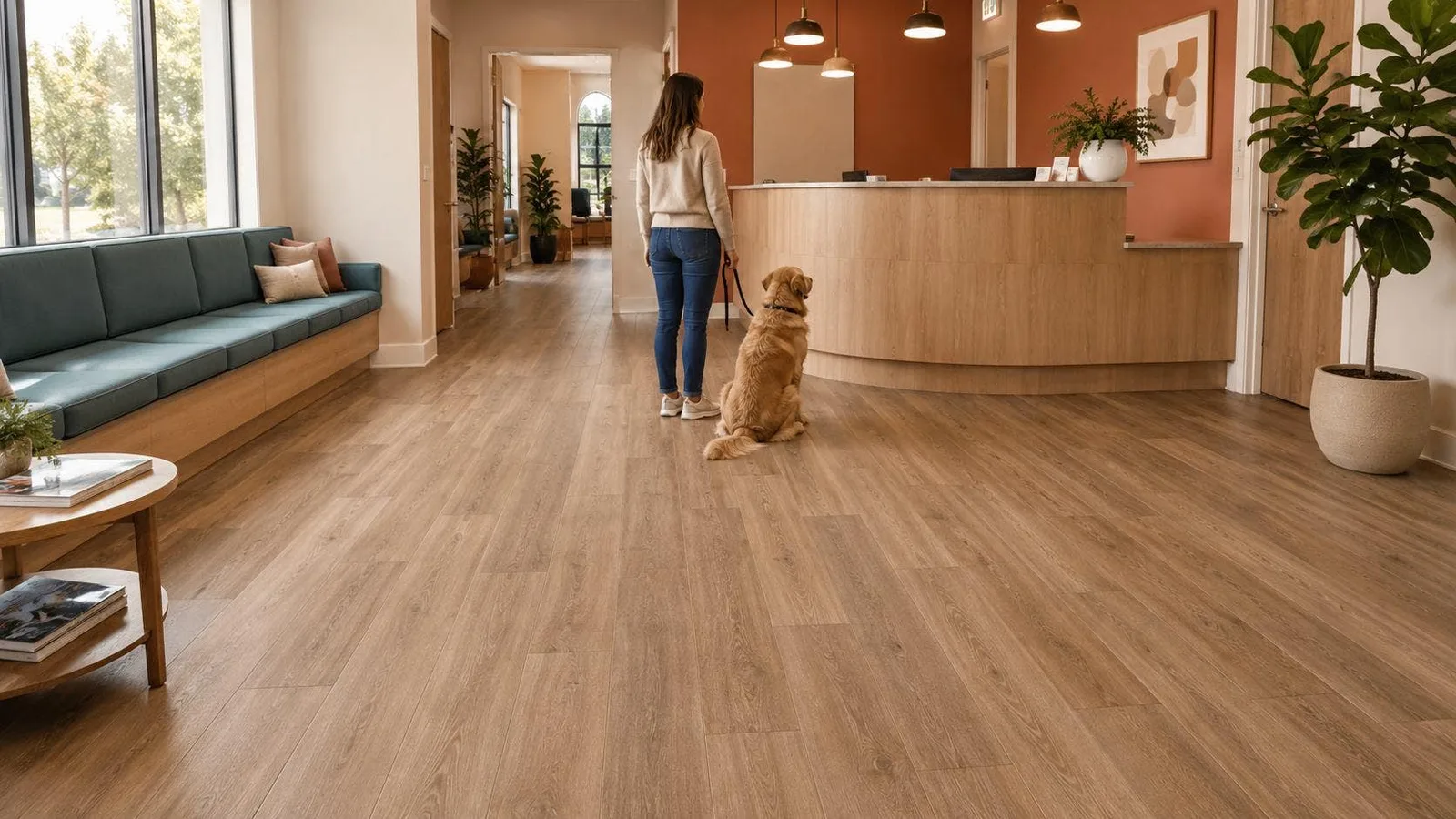
For the rooms clients see, rigid core vinyl is the workhorse. Waterproof core, wood or tile visual, and an install that never touches your slab chemistry.
TritonCORE Pro 7" is our anchor, and the only vinyl product on our site with a complete published spec block: 20 mil wear layer, 5mm, 15-year limited commercial warranty, nothing left blank. COREtec Plus Premium 7" and 9" and COREtec Grande all step up to 30 mil, and Grande's mixed plank lengths keep a long corridor from looking like a repeating pattern.
From there the differences narrow to wear layer and format. Shaw In the Grain is the one product where the wear layer is an option you buy rather than accept, up to 30 mil. Shaw Paragon Tile Plus 12" gives a tile look with no grout lines to trap anything, and Envee Tacky Back is the overnight fix: peel-and-stick, so you can close at six, install one exam room, and open at eight.
Weighing core types? Our SPC vs. WPC comparison covers why the denser core is the one to specify here.
Our Top Recommendations:
TritonCORE Pro 7" - 20 mil, 15-year commercial
COREtec Plus Premium 7" - 30 mil
COREtec Plus Premium 9" - 30 mil, "never swell when exposed to water"
COREtec Grande - 30 mil, mixed plank lengths
Shaw In the Grain - wear layer selectable to 30 mil
Johnson Sicily - 15-year commercial
Shaw Paragon Tile Plus 12" - 20 mil, tile look
Envee 7" Rigid Core - heavy foot traffic
Envee Tacky Back Vinyl Tiles - 22 mil, peel & stick, overnight swap
Vinyl Sheet
Sheet gives you the fewest seams per square foot, which is why it's the traditional healthcare answer.
Mannington BioSpec 6'6" is the one product in our catalog positioned for healthcare. Mannington calls it a high-performance homogeneous vinyl sheet containing "an anti-microbial element 'MCare' which inhibits a wide range of bacteria and mold growth." That's Mannington's claim about their own product. We quote it, we don't adopt it.
Realities II is heterogeneous, and its 10-year warranty is a commercial term, which is what matters if this is a business and not a house. Shaw Great Basin II is the budget end of the shelf.
One caveat that applies to all four: none of our sheet vinyl publishes a wear layer or an overall thickness. If your spec calls for a stated mil, ask us and we'll pull manufacturer documentation rather than guess in a product description.
There's one thing we can't sell you here. Our sheet vinyl installs loose-lay, modified loose-lay, or full-spread glue. We publish no heat-weld spec for it and sell no welding rod for it. If your architect specified welded seams with a flash-coved base, that's a specialty-installer purchase.
Our Top Recommendations:
Mannington BioSpec 6'6" - homogeneous sheet
Mannington Realities II 6' - 10-year commercial
Mannington Meander 6' - Mannington names hospitals
Shaw Great Basin II 12' - waterproof, FloorScore certified
Drainage Tile for Wet Work
A bathing station is a water-management problem, not a flooring problem. ProFlow Drainage Tiles sit on a raised open grid, so water drains beneath the walking surface instead of pooling. Mold and mildew resistant, slip resistant, 10-year warranty, with a full Grip-Loc edge and corner system.
Our Top Recommendations:
What We Leave Off This Page
Our standard recycled rubber rolls aren't here, deliberately. Our own rubber flooring rolls buying guide states they are "semi-porous, so liquids can seep into the pores over time and get to the subfloor." Great gym flooring, wrong for a sealed recovery room. Pet turf is off for the same reason, so see dog kennel flooring for outdoor runs.
Veterinary Clinic Flooring by Zone
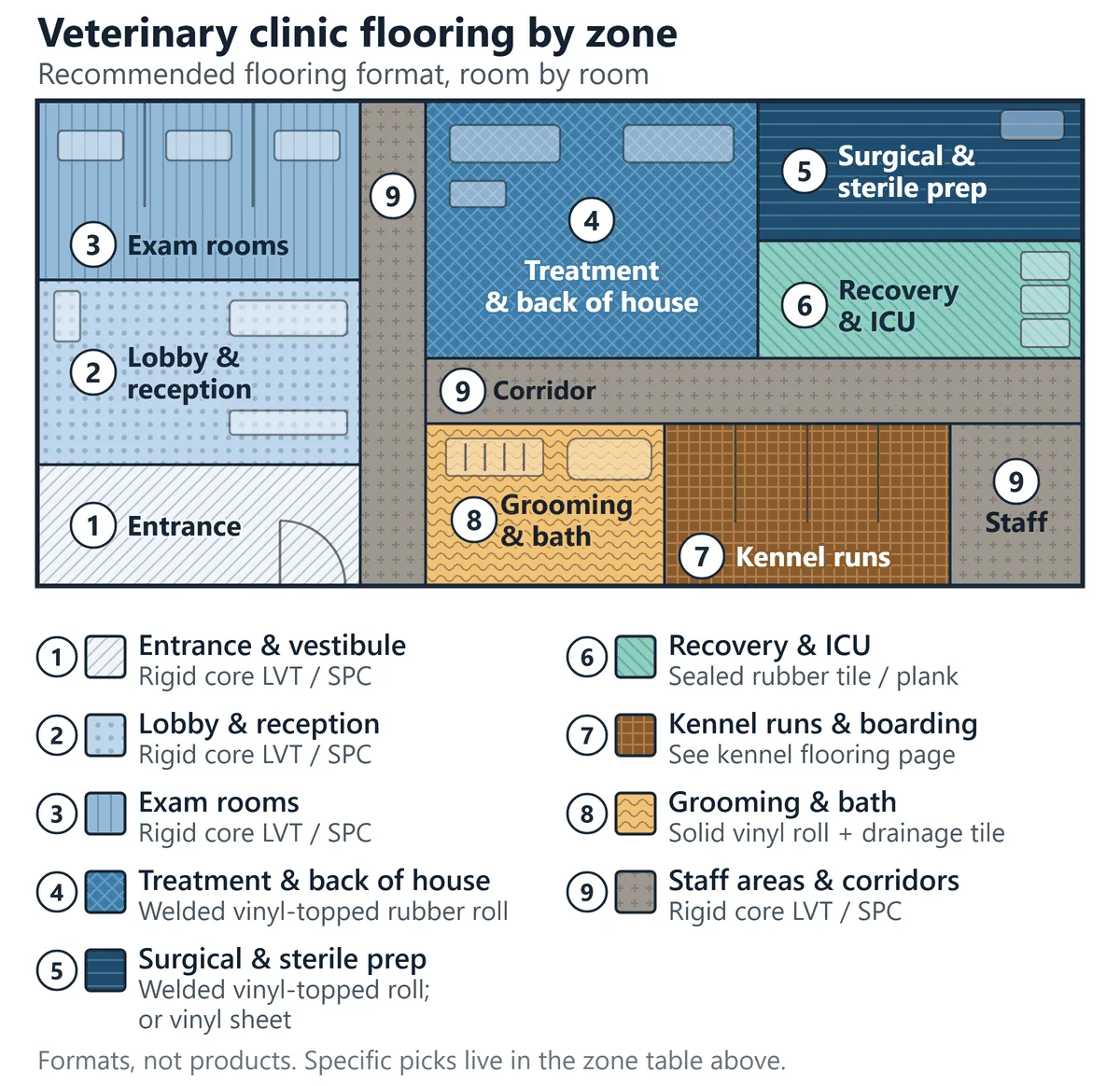
This is what we'd put in each room. The plank that's right for your lobby is the wrong buy for your tub room, so stop shopping for one floor.
| Zone | Up against | What we'd spec | Watch for |
|---|---|---|---|
| Entrance & vestibule | Grit, salt, rain on wheels and paws | TritonCORE Pro 7", glued where carts roll | Walk-off matting is a separate purchase |
| Lobby & reception | Client eyes, accidents, chair traffic | TritonCORE Pro 7", COREtec Plus Premium 7", Shaw Paragon Tile Plus 12" | Glue under heavy desks |
| Exam rooms | Urine, claws, daily disinfectant, an 8–12 ft room | TritonCORE Pro 7", Shaw In the Grain if you want 30 mil, Envee Tacky Back for an overnight swap | Too small for a custom-cut roll (15 ft minimum) |
| Treatment & back of house | Dropped instruments, prolonged animal contact, constant wet | Impact Rolls Wood Series with welded seams, VersaRUBBER ELITE, Diamond Nitro Rolls | Welding thread required. The weld is a professional job |
| Surgical & sterile prep | The strictest cleanability spec in the building | Welded seams plus a coved base. Impact Rolls Wood Series is our only welded-seam product; Mannington BioSpec is the homogeneous sheet option | We sell no weldable sheet vinyl. Flash-coved sheet is a specialty buy |
| Recovery & ICU | Enclosed rooms, retained odor, animals lying on the floor | VersaRUBBER ELITE, 1/2" Premium Gym Floor Tiles, Impact Rolls Wood Series | Enclosed rooms punish porous material |
| Kennel runs & boarding | Power washing, urine volume, drainage | Shop dog kennel flooring for turf, drainage tile, kennel mats | Don't spec interior flooring into a run |
| Grooming & bath | Standing water, wet traction, chemistry | Coin Nitro Rolls on the floor, ProFlow Drainage Tiles in the tub surround | More texture, more scrubbing |
| Staff areas & corridors | Traffic volume, chair casters, long runs | TritonCORE Pro 7", COREtec Grande for mixed lengths, Pre-Cut Nitro Rolls | Wider planks, fewer seams |
Most of the practices we quote are re-flooring one room that failed, not a building. For the reasoning behind each call, read why we spec each zone this way.
Wear Layer and Thickness Options for Veterinary Clinic Flooring
Wear layer decides whether your floor lasts five years or fifteen, and it's the spec most people skip. It's the clear layer on top of a vinyl plank, measured in mils.
- 20 mil is the floor for a clinic. A 6 or 12 mil residential plank scuffs through in a treatment corridor inside a couple of years. TritonCORE Pro 7", Shaw Paragon Tile Plus 12", and Envee Tacky Back all sit at 20 mil or better.
- 30 mil is what we'd spec on a build meant to last. COREtec Plus Premium 7" and 9", COREtec Grande, and Shaw In the Grain at its top wear layer are the 30 mil options, and that's where we'd point you for the busiest room in the building. Our catalog runs 20 to 30 mil with nothing in between, so the choice is simpler than it looks.
- For rubber, thickness does a different job. VersaRUBBER ELITE runs 1/4". Impact Rolls Wood Series is roughly 7mm with a 2mm vinyl top. 1/2" vulcanized tile is the pick where things get dropped.
Two gaps to know about before you build a spec package. Wear layer isn't published for every product we carry, including our sheet vinyl, and it isn't a filter in our navigation yet. Need the number for a submittal? Ask us and we'll pull it from the manufacturer.
Installation Options for Veterinary Clinic Flooring
Installation is where modular flooring wins this vertical, and the reason is substrate prep.
A resinous or epoxy coating bonds chemically to your slab, so the slab has to be qualified first: moisture testing to ASTM F1869 or F2170, manufacturer sign-off, and profiling by shot-blasting or diamond grinding. Then it needs cure time. AAHA's own table notes resinous coating "requires professional application (not a DIY flooring)."
Modular flooring skips the whole sequence. You confirm the slab is flat and clean, and start laying.
Floating Click Install
TritonCORE Pro 7" and COREtec Plus Premium 7" click together and float over your existing hard surface. Fastest install, no adhesive, and it comes back up if you move. Which is exactly what AAHA means by not installing a floor you can't take with you.
Glue-Down
Full-spread adhesive is the right call anywhere wheels live: cage banks, gurneys, auto-scrubbers. TritonCORE Pro 7" can be direct-glued, VersaRUBBER ELITE is a glue-down product, and our vinyl sheet takes full-spread adhesive. It also prevents the perimeter creep a floating floor gets under uneven load.
Peel and Stick, Loose Lay, and Perimeter Tape
Envee Tacky Back Vinyl Tiles have a pressure-sensitive back: one exam room, after hours, open in the morning. Rolls can also go down loose or taped at the perimeter in a corridor. We wouldn't do that in a wet zone, because a loose edge is where liquid gets underneath.
Heat-Welded Seams
Impact Rolls Wood Series calls for grooving seams to two-thirds depth, welding with the manufacturer's rod, and skiving twice. Professional installation is recommended.
Coved Base and Transitions
A coved sanitary base is standard spec in vet build-outs, because the floor-to-wall junction is where mop water and urine collect. Duracove 2.5" rubber wall base is FloorScore certified and phthalate free, in 120-foot rolls. If your architect called for coving higher up the wall, and many specify six inches, use the Duracove 6" instead. There's a 4" in between if you need it.
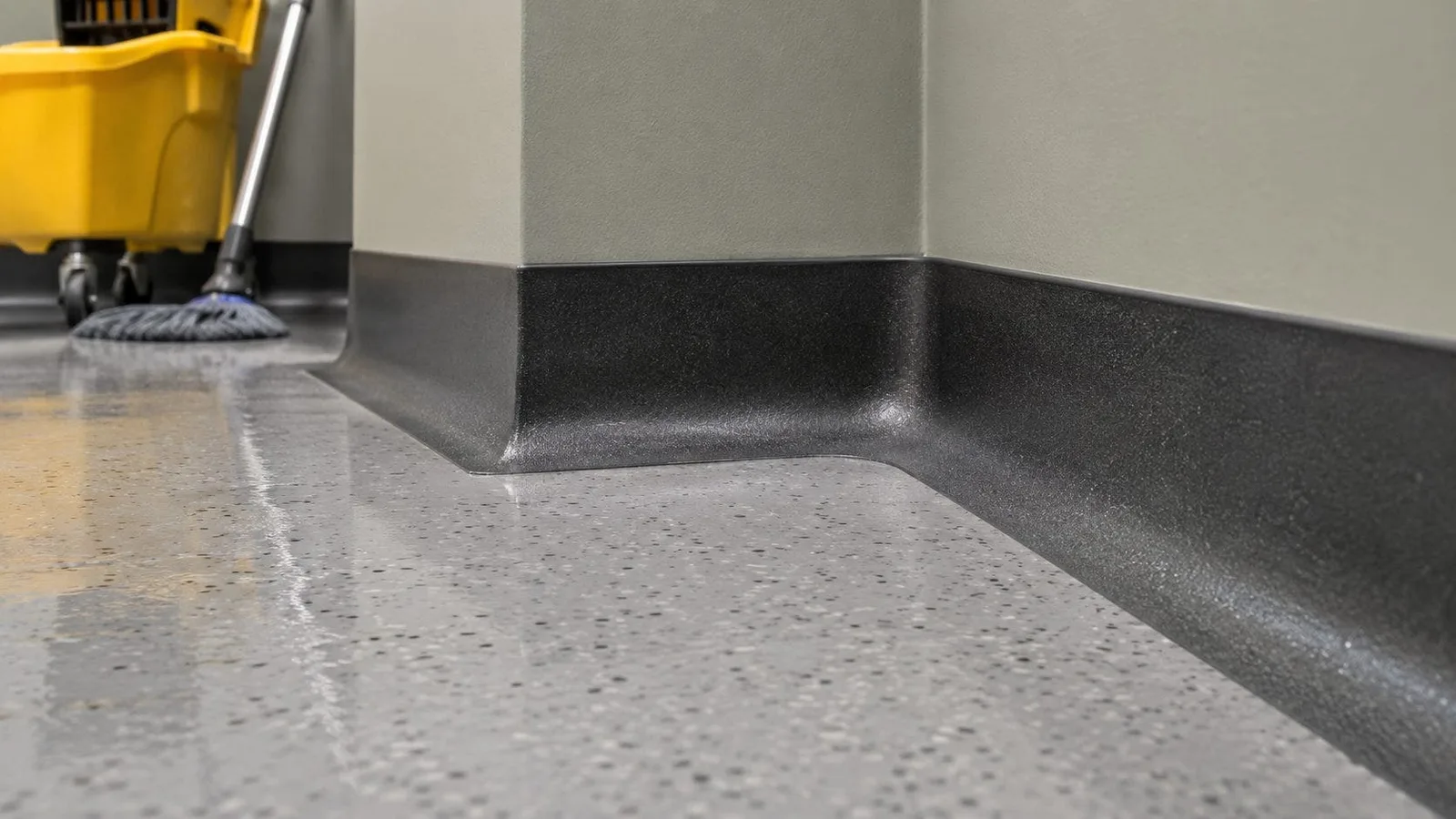
Transitions are where we're thin. Our rubber floor ramps come in two heights only: 0.25" for 4–6mm material and 0.375" for 7–9mm. Coming off 1/2" or 3/4" rubber, we don't stock a ramp, so ask us first. The honest answer in that case is usually to terminate into the wall base rather than ramp out.
On glue-down and sheet installs, seam sealer closes the joint where two sheets meet. Worth saying plainly: sealing a seam is not the same thing as heat-welding one. A sealed seam resists water at the surface; a welded seam fuses the two sheets into one. For a surgical or sterile-prep room, the weld is the spec, and Impact Rolls Wood Series with its welding thread is the only way we can get you there.
Accessories You'll Need
Duracove 2.5" Rubber Wall Base - coved sanitary base, FloorScore certified
Duracove 6" Rubber Wall Base - for 6" coving specs
Impact Wood Roll Welding Thread - required for welded seams
Rubber Floor Ramps - transitions for 4–9mm material
Polyurethane Seam Sealer - glue-down and sheet seams
Disinfectant Compatibility by Material
Pick the floor first, then find out your protocol damages it, and you've bought a five-year floor at fifteen-year money.
- Dry sweep or vacuum first. Grit is what abrades a wear layer.
- Then damp mop with a neutral pH cleaner, changing the water often.
- Let it air dry for a streak-free finish.
For the protocol side of this, our veterinary clinic flooring guide covers how to disinfect vet clinic floors without damaging them.
Confirm your disinfectant with the manufacturer, every time. Quats, accelerated hydrogen peroxide, and dilute bleach all behave differently on rubber, on a urethane-finished plank, and on homogeneous sheet, and the answer depends on concentration and dwell time as much as chemistry. AAHA flags it directly: "Bleach can shorten the life of some types of flooring." If the compatibility statement isn't in the product literature, ask us and we'll go to the manufacturer.
Here's a conflict we'd rather name than bury. Our own rubber flooring care guidance advises against solvent and oil-based cleaners, naming Pine-Sol and Lysol as products that may damage the floor over time. Lysol is a mainstream clinic disinfectant. If your protocol is built on it, rubber is probably the wrong material for that room and a sealed vinyl surface is the better fit. Awkward thing for a rubber flooring retailer to write down. Still true.
Texture costs labor. AAHA frames the tradeoff as "balancing cleanability with slip resistance. More texture requires more scrubbing." Coin and diamond patterns buy grip in a wet room and hold soil in the pattern.
Power washing is a kennel-run tool, not an interior one. Drainage tile over a sloped, drained slab is built for it. Glue-down planks, floating planks, and taped rolls are not, because you're driving water into seams and under edges at pressure.
How Our Veterinary Clinic Flooring Stacks Up
Search for veterinary flooring, vet hospital flooring, or animal hospital flooring and you'll find the same two kinds of results: coatings contractors who want to schedule a site visit, and manufacturers with excellent zone-by-zone spec guidance and no way to buy anything. Neither helps a practice manager fix a single failed exam room this month, which is exactly the buyer this page is built for.
- You can buy it today, at a published price. Add it to a cart at 9pm on a Tuesday without a quote request in the middle.
- We segment by clinical zone, not by material. You're filling in a floor plan, not shopping a material category.
- Modular install means no slab qualification. No moisture testing, no shot-blasting, no cure time.
- Floating formats come back up. Practices on a lease shouldn't leave a floor behind.
- Free samples, shipped free, so you can test material against your own disinfectant first.
- Custom roll cutting on most roll goods, in whole-foot increments, 15-foot minimum.
- 125,000+ verified third-party reviews across 18 years of selling flooring online.
And the limits, because you'll find them anyway. We don't publish measured slip-resistance values, we don't sell heat-weldable sheet vinyl, and we won't tell you a floor is code-compliant when that call belongs to your licensing board.
Not sure where to start? Order free samples or call our commercial sales team at (866) 416-6388, and we'll point you at the right floor for the room that's failing.
Veterinary Clinic Flooring FAQs
Q: Which flooring should I buy for each room in my clinic?
A: There isn't one answer, and any vendor who gives you one is selling their inventory. Rigid core LVT or SPC at 20 mil or thicker for lobby and exam rooms, sealed rubber or a welded vinyl-topped roll for treatment and recovery, drainage tile in the bath area.
Q: What do "non-porous" and "impervious" mean for clinic flooring?
A: They're regulatory terms, not adjectives. New Jersey's animal facility code (N.J.A.C. 8:23A-1.1) defines an impervious surface as one that "does not permit the absorption of fluids," "will not retain odors," and on which fluids "bead up and run off." Other states use similar language, so check your own board's rules.
Q: Do I need antimicrobial flooring for a veterinary clinic?
A: Probably not, and it's worth knowing why. An antimicrobial claim on a floor is a regulated claim, and we don't make it about anything we sell. Two products carry a manufacturer's statement. Mannington describes BioSpec as containing "an anti-microbial element 'MCare'," and VersaRUBBER ELITE's maker calls its surface "anti-fungal & antibacterial." Those are their claims, not ours. What actually keeps a clinic floor clean is a non-porous surface, seams that don't hold liquid, and a disinfectant protocol the material tolerates. Get those three right and the additive is a bonus, not the spec.
Q: Is rubber flooring urine proof?
A: Depends entirely on which rubber, and the industry gets this wrong. Our standard recycled rubber rolls are non-vulcanized recycled tire rubber, and our own buying guide calls them "semi-porous, so liquids can seep into the pores." The sealed products are different. VersaRUBBER ELITE is described by its manufacturer as non-porous, and Impact Rolls Wood Series puts solid vinyl over the rubber.
Q: Does clinic flooring need a specific slip-resistance rating?
A: Sometimes, and the vet bar is higher than the general one. Fear Free Practice Certification Standards (V5) require COF "at least 0.60 when wet," with proof uploaded, while ANSI A326.3 sets wet DCOF at 0.42 or greater. OSHA sets no COF requirement and the ADA sets no number at all. We publish no measured COF values, so send us the SKU and we'll request test data.
Q: Do I have to test my concrete slab before installing?
A: For modular flooring, usually no, and that's the biggest practical advantage here. Resinous and epoxy systems need moisture testing to ASTM F1869 or F2170, manufacturer sign-off, and shot-blasting or grinding first. Floating and interlocking floors skip all three.
Q: How long will my clinic be closed for installation?
A: Much less than with a coating. A conventional epoxy floor runs roughly a three-day install plus two to three days of cure. Rigid core and interlocking tile have no cure time, so one exam room goes in overnight.
Q: Will dog nails damage rubber flooring?
A: They can, and the trade press has said so in print. Pet Boarding & Daycare reports that dogs "can dig into it, creating divots" and that "seams deteriorate quickly once separated." That lands hardest on soft recycled matting with open seams, which is why we point clinics at vulcanized products with welded or fully adhered seams.
Q: Does rubber flooring smell?
A: New rubber does off-gas. The smell peaks in the first 48 to 72 hours, worse in heat and humidity, then fades with ventilation. That matters here, because Fear Free's mandatory standards require interiors "free of offensive odors." Install ventilated and wait a few days before patients occupy the room.
Q: What disinfectants can I use on the floor?
A: Confirm compatibility with the manufacturer for your specific protocol, concentration and dwell time included, because the same product behaves differently on rubber, plank, and sheet. AAHA notes that "bleach can shorten the life of some types of flooring," and our own rubber care guidance advises against solvent and oil-based cleaners, naming Pine-Sol and Lysol.
Q: Is veterinary use covered by the flooring warranty?
A: Read the warranty before you buy, and ask us to send it. We reviewed a real luxury vinyl warranty that excludes "pet damage such as chewing, digging, clawing," lists healthcare, retail, and education as light-commercial uses but never veterinary or boarding, and excludes "casters and other rolling loads." We're confirming per-SKU whether animal-care use is in scope.
Q: Can I order a custom-cut roll for an exam room?
A: Probably not. Custom roll cutting carries a 15-foot minimum cut length in whole-foot increments, and a typical exam room runs 8 to 12 feet. Use tile, plank, or a fixed-size pre-cut roll instead. Custom cutting pays off in treatment bays and corridors.
Q: Can I power wash the floor?
A: Over a sloped, drained kennel slab, yes, and drainage tile is built for it. Inside the clinic, no: pressure drives water into seams and under edges, and it can void an adhesive warranty. Shop dog kennel flooring for runs.
Q: Will new flooring fix the noise in my kennel area?
A: No. Flooring isn't the lever here. dvm360 has put it bluntly: "There's no good flooring for noise control." Rubber absorbs some impact sound and footfall, a genuine but modest benefit. Barking in a hard room is a ceiling, wall, and layout problem.
Q: Does your flooring meet AAHA, Fear Free, USDA, or state requirements?
A: We don't make compliance claims, because compliance is your state board's call against a specific room and standard. We can describe what those standards ask for and hand you manufacturer documentation. AAHA asks for floors "impervious to moisture, easy to clean, and easy to maintain." On USDA, 9 CFR 2.1(a)(3) exempts persons handling animals solely for boarding, grooming, or medical treatment, so 9 CFR Part 3 typically doesn't apply to a private practice.
Other Helpful Veterinary Clinic Flooring Content
Veterinary Clinic Flooring: A Practical Guide to Specifying the Right Floor by Zone
The full spec walkthrough, zone by zone, including what fails in real veterinary installs.
Best Dog Kennel Flooring: 3 Doggy Daycare Ideas
Boarding and daycare layouts, drainage, and washdown.
Turf, drainage tile, and kennel mats for outdoor runs.
SPC vs. WPC Luxury Vinyl Flooring
Why core type matters in a clinical room.
The full commercial catalog.
Ready to get started?
Start with the room that's failing. Most practices we work with are replacing one exam room or one treatment bay, not a whole building, and that's a project a practice manager can scope and buy without a capital request.
Order free samples and test them against your own disinfectant protocol before you commit. Need wear layer, warranty scope, or manufacturer test data for a spec package? Call our commercial sales team at (866) 416-6388 and we'll pull it for you.