Marley Dance Flooring: The Complete Buyer's Guide
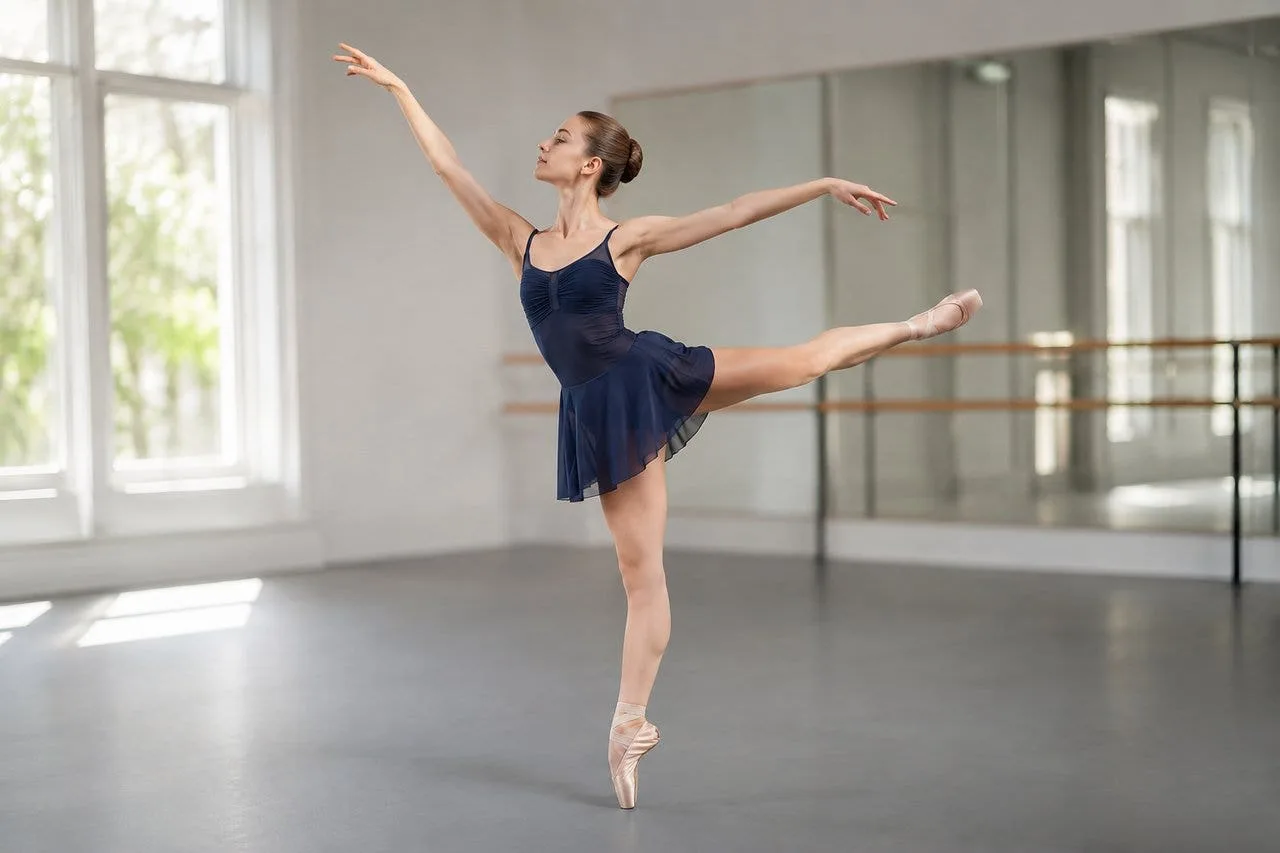
Marley flooring is a roll-out vinyl dance surface engineered with a controlled slip — enough slide for clean turns, enough grip for jumps and fast footwork. Originally a brand name, “marley” is now the generic term for the vinyl dance rolls used in studios, on stages, and in home practice spaces. It’s durable and can be used for many different styles of dance. But how do you go about choosing the right Marley dance floor?
In this guide, we’re going to cover all things Marley floors, from what it is to where to use it, to the top-rated options on the market. We want to help you on your Marley floor shopping journey. Let’s get started!
Key takeaways
- Marley is roll-out, dance-grade vinyl with a controlled slip — the studio standard.
- Expect about $2.40–$9.25/sq ft; rolls are cut to order and priced per linear foot.
- Most versatile: VersaStep Pro — one floor for every style, soft & hard shoe. Style-specific picks: ProStep (ballet/soft-shoe), Rosco Adagio/Adagio Tour (tap), Wood Dance Rolls (ballroom).
- Add a sprung subfloor to protect dancers’ joints.
- A full roll can weigh up to ~250 lbs — plan delivery and handling.
In this guide: What is a Marley Floor? · How Much Does Marley Dance Flooring Cost? · How to Choose the Right Marley Floor · Common Marley Floor Applications · Marley Floors at a Glance · Best Marley Floor by Dance Style · Types of Marley Flooring · Marley Dance Flooring Subfloors · Marley Flooring Installation · Marley Flooring Maintenance · Marley Dance Flooring FAQ
What is a Marley Floor?
If you’re a dancer, you’ve probably heard of and danced on Marley. The truth is, Marley floors started as a brand of dance flooring. Nowadays, you can’t even purchase the original Marley floors, but the brand was so popular that all vinyl dance rolls are commonly referred to as Marley.
Marley floors are so popular because the dance community loves the safe, controlled surface with enough slide for turns and enough grip for big jumps and fancy footwork.
What's the Difference Between Marley Floors and Vinyl Flooring?
The short answer: nothing. When the Marley Dance Floor brand stopped producing floors, the name was still used to describe vinyl dance floors found in studios. Technically, now that Marley no longer exists, items identified as Marley are vinyl floors that are designed with the right amount of grip and slide for dance.
At Flooring Inc., ProStep and VersaStep are our own marley lines, while Rosco is a premium third-party brand we carry — so you can match performance to budget.
Pros and Cons of Marley Dance Flooring
Marley-style roll-out dance flooring is famous in the dance world. Let’s go over its benefits and disadvantages to understand more about Marley dance floors.
Pros of Marley Flooring
- Best slip resistance/grip: Marley is one of the safest options for turns and jumps.
- DIY installation: Unroll, tape the seams, done — no glue, no installer.
- Price: Most vinyl dance rolls are competitively priced to fit all budgets.
- Maintenance: All Marley requires is regular sweeping and damp mopping with a gentle cleaning solution.
- Portability: Dance tiles aren’t the only portable option! There are plenty of Marley options that you can pick up and take on the road.
Cons of Marley Flooring
-
Not as portable as tiles: While smaller cut size Marley is very portable, transporting large rolls is still a process as a typical full roll of Marley can weigh up to 250 Lbs.
Related Content >> How to Choose a Dance Floor
How Much Does Marley Dance Flooring Cost?
Marley dance flooring runs from about $2.40 to $9.25 per square foot, depending on the brand, thickness, and whether it’s a basic practice roll or a heavy-duty performance floor. Most rolls are cut to order and priced per linear foot, so your total depends on the size of your space. Here’s roughly what to budget:
| Tier | Typical use | Price (from) |
|---|---|---|
| Budget / practice | Home studios, first floors, big dance teams | ~$2.40–$2.80/sq ft |
| Professional studio | Daily class wear, multi-style studios | ~$3.40–$4.45/sq ft |
| Heavy-duty / wood-look | Performance, ballroom, sprung feel | ~$9.25/sq ft |
| Sprung subfloor (add) | Cushion under any marley | Kits from ~$163 |
| Practice kit (roll + subfloor) | All-in-one home setup | from ~$293 |
Tip: a subfloor adds cost up front but protects dancers’ joints — and the floor — for years.
How to Choose the Right Marley Floor
There are a lot of Marley dance floor options, but don’t stress! To narrow your search, here are a few main points to consider when making your decision.
- Dance style: The most important thing is making sure the Marley floor you choose is suitable for all dance styles you plan on using it for. If you’re just using it for one style, we’ll tell you what the best choice is for that style. If you have a multi-use studio, we’ll steer you towards the most versatile Marley floor rolls.
- Type of installation: Some rolls are portable and great for tours, while some are best in more permanent situations.
- Portability: If you need a dance flooring roll for when you’re on the go, you’ll want to consider how easy your Marley floor is to haul.
- Price: While we don’t recommend making your decision solely on price, we understand it is a factor. Don’t worry, our selection of Marley dance floors cater to a wide range of prices to fit all budgets.
Most marley rolls are about 5–6.5 ft wide, so larger floors will have seams. Plan seams to fall outside your main turning and landing zones, and join rolls with dance floor tape (or weld/glue them for a permanent install).
Common Marley Floor Applications
Marley floors are incredibly versatile and work in so many settings because of their ease of installation, durability, and the right balance of grip and slide. You can install them just about anywhere, whether you’re a choreographer, teacher, or a dance enthusiast looking to set up a home studio.
Popular settings for Marley floors include:
| Related Content >> Ballet Dance Flooring Buying Guide |
Marley Floors at a Glance
Here’s how our most popular marley rolls compare, so you can match a floor to your style and budget:
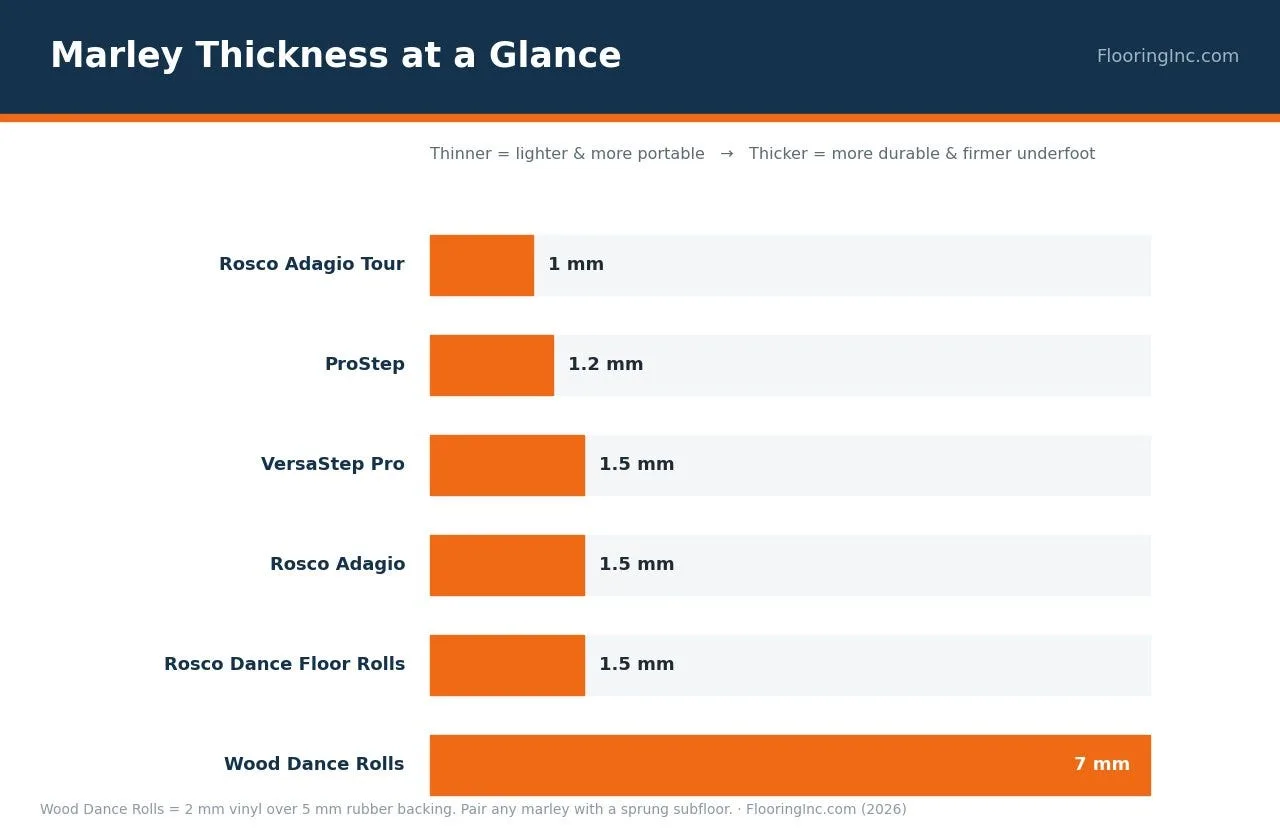
| Marley floor | Best for | Thickness | Reversible | Price (from) |
|---|---|---|---|---|
| ProStep | Ballet, lyrical & all soft-shoe; budget & teams | 1.2 mm | Yes | $2.39/sq ft |
| VersaStep Pro | All styles, soft & hard shoe — the most versatile pick | 1.5 mm | No | $2.79/sq ft |
| Rosco Adagio Tour | Touring, tap, flamenco, Irish step | 1.0 mm | No | $3.44/sq ft |
| Rosco Adagio | Tap, ballet, all styles; firm underfoot | 1.5 mm | No | $4.33/sq ft |
| Rosco Dance Floor Rolls | Ballet, jazz, hip-hop; reversible | 1.5 mm | Yes | $4.45/sq ft |
| Wood Dance Rolls | Ballroom, flamenco, Irish; wood-look + sprung | 7 mm | No | $9.25/sq ft |
Best Marley Floor by Dance Style
Want one floor for everything? VersaStep Pro is our most versatile marley — its controlled-slip surface is built for soft shoes and hard shoes (tap included), so a multi-style studio can outfit the whole floor with a single product. The style-by-style picks below are for when you want a floor tuned to one specific style.
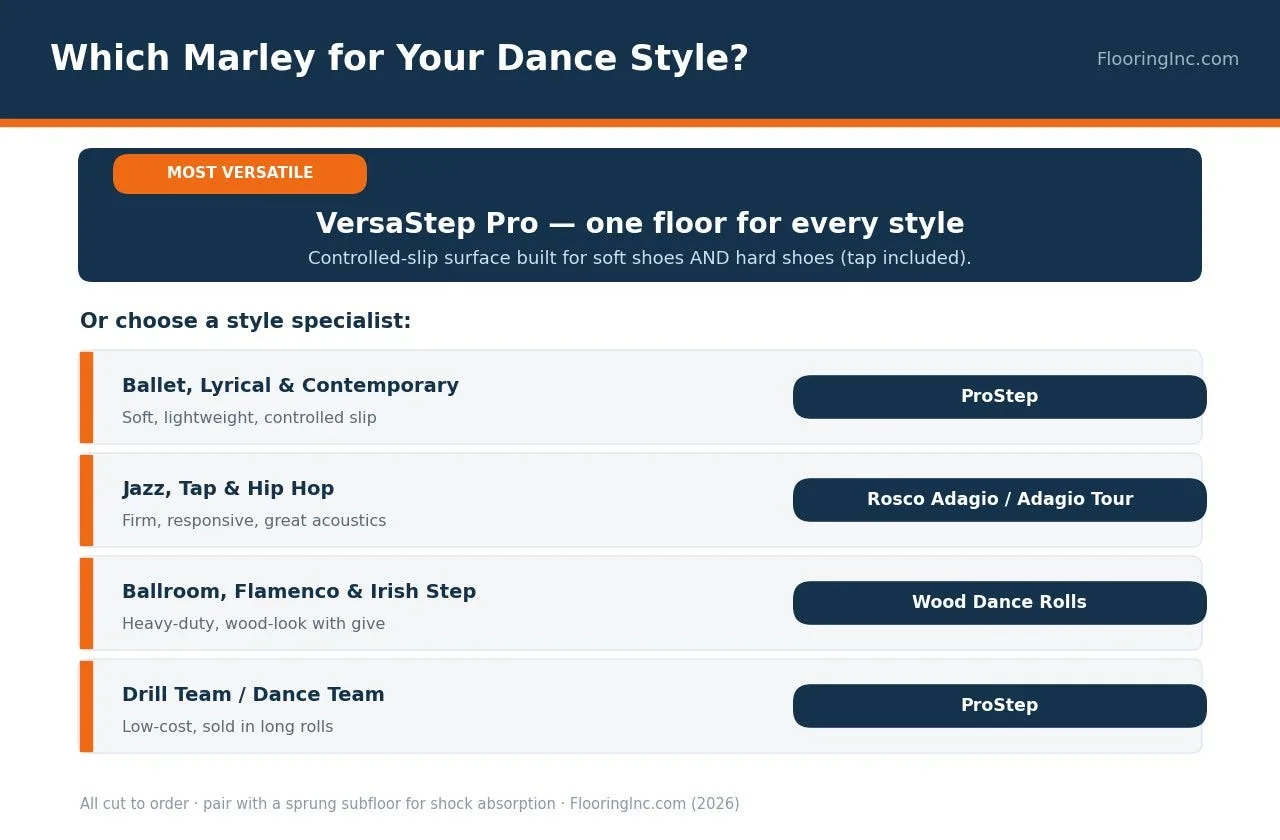
To help decide what Marley floors are right for your style of dance, let’s go over the common dance styles and our recommended flooring option.
Ballet, Lyrical, and Contemporary
Best pick: ProStep — soft, lightweight, controlled slip for barefoot and soft-shoe work.
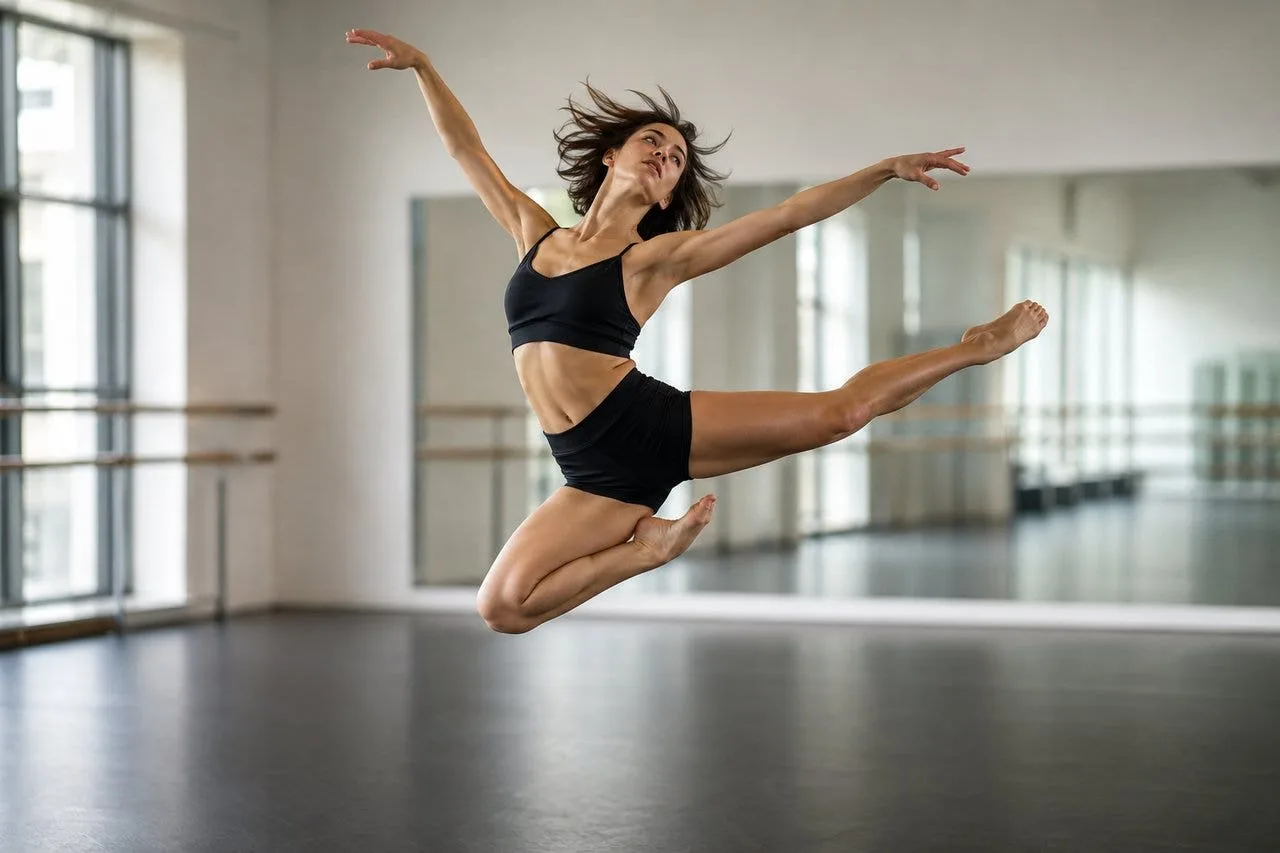
The precision, skill, and movement of these dance styles require a delicate balance of slide and grip. Since some routines are performed either barefoot or in slippers on the tips of your toes, it’s important to find a vinyl floor with both grip and slide to keep dancers moving, and safe.
ProStep Dance Floor
Available in reversible colors black/gray and black/white, our ProStep Dance Floor is very lightweight and flexible, so it can be easily rolled and unrolled as needed. It’s ideal for temporary dance flooring solutions and tours and provides excellent controlled slip. Plus, ProStep Dance Floor Marley is a medium-fast floor with extra resiliency.
Shop ProStep Dance Floor Shop All Ballet, Lyrical, and Contemporary Marley
| Related Content >> Home Dance Flooring Buying Guide |
Jazz, Tap, and Hip Hop
Best pick: Rosco Adagio or Adagio Tour — a firm, responsive surface with the acoustics percussive styles need.
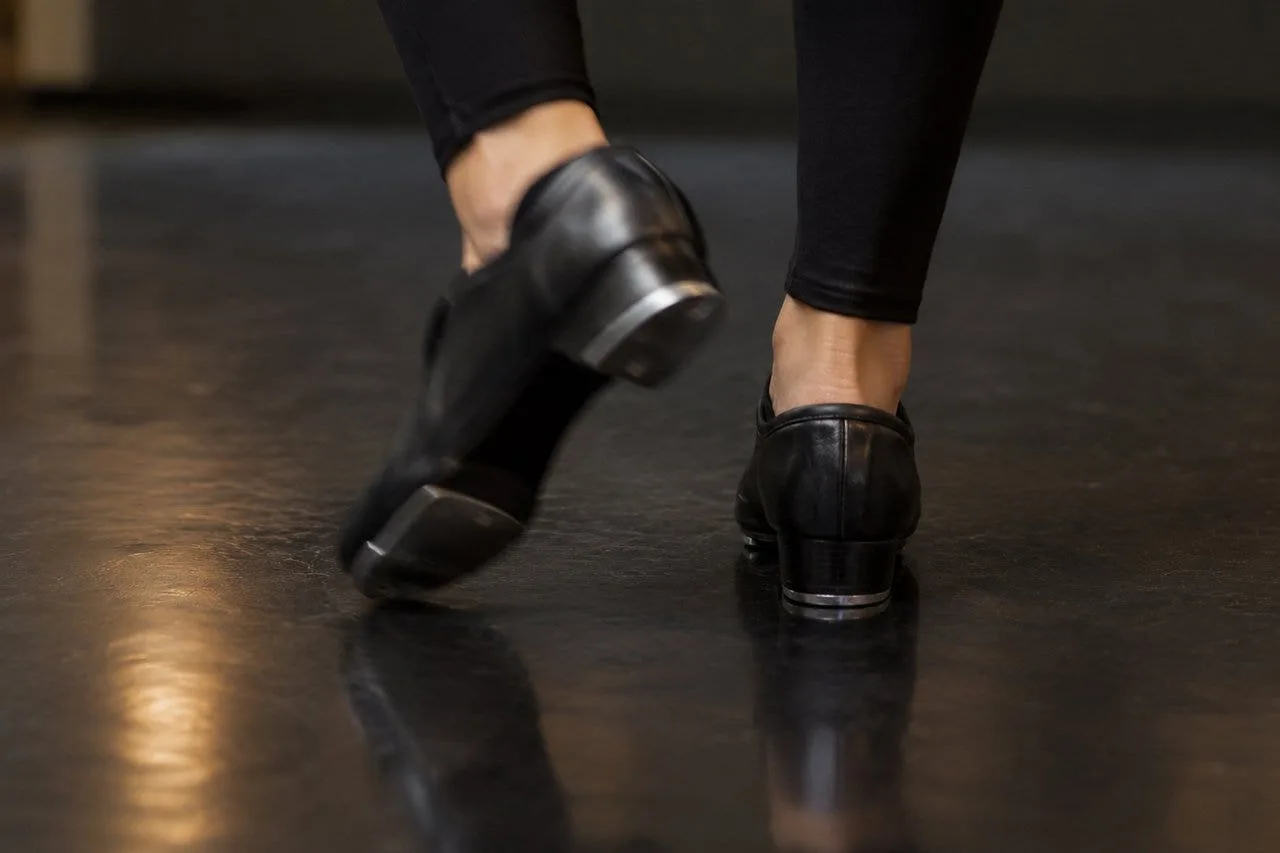
The speed, precision, and high-energy movements of jazz, tap, and hip hop require a tough floor with just enough grip to keep you from sliding. These styles are usually fast-moving and the Rosco Adagio Marley Rolls can help get the job done.
Rosco Adagio Rolls
For each of these high-energy genres of dance, Rosco Adagio rolls are versatile and non-reflective with a controlled slip vinyl surface. So regardless of flicks, kicks, or jazz hands, this roll has you covered with excellent support and firmness for those hard-sole shoes. Plus, whether you’re on the go, or practicing in-studio, these rolls are great for permanent, semi-permanent, or temporary installation.
Shop Rosco Adagio Rolls Shop All Jazz, Tap, and Hip Hop Marley
Ballroom, Flamenco, and Irish Step
Best pick: Wood Dance Rolls — heavy-duty, wood-look, with the give that hard footfalls demand.
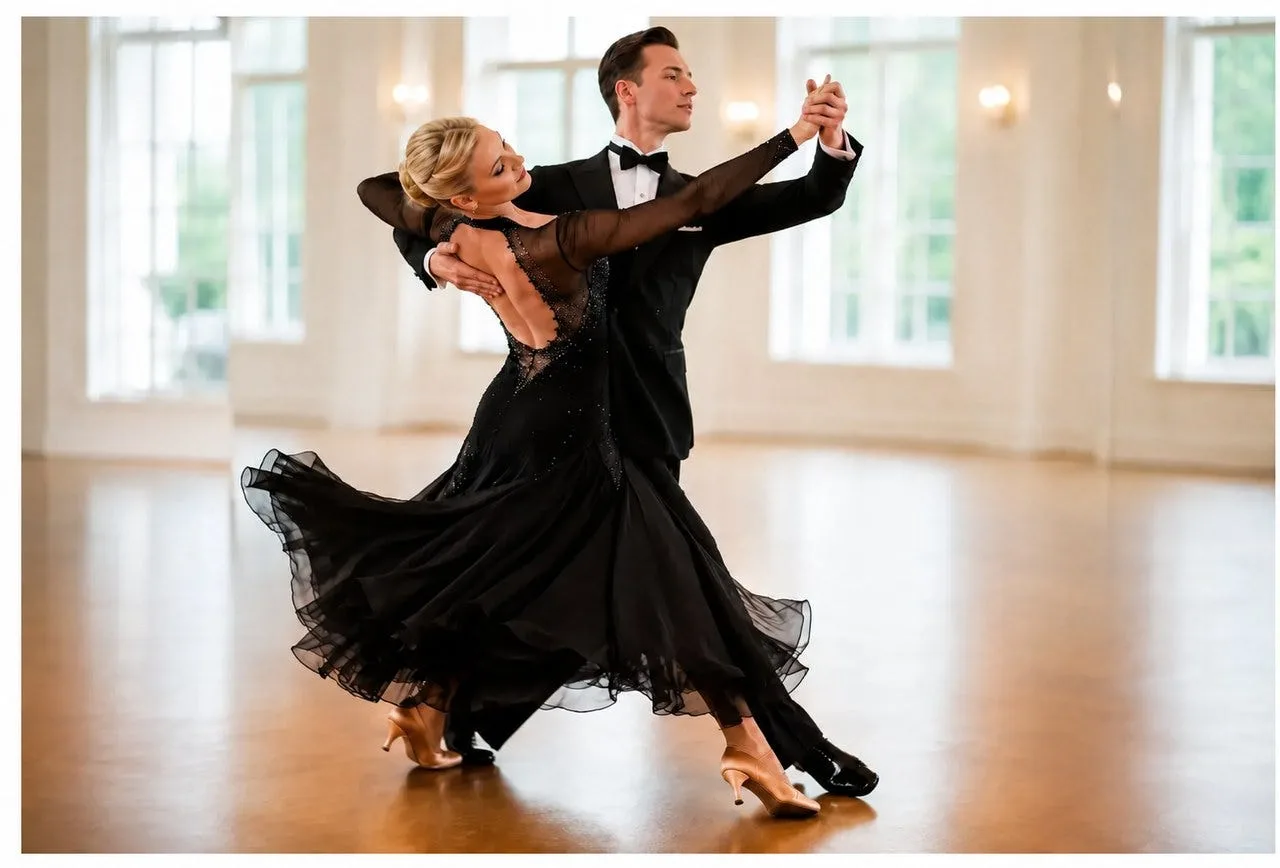
All of these dance styles have a lot of stomping or hard footfalls at one point or another. That’s why it’s important to find a heavy-duty Marley roll to hang tough during these dance routines. While some Marley rolls might not be able to handle it, there are still a lot of great, durable options available including Wood Dance Rolls.
Wood Dance Rolls
Wood Dance Rolls feature a vinyl wear layer that is backed by a rubber underlayment, resulting in a floor that looks like a professional studio hardwood flooring with a slight 'give' that a dancer needs. This ergonomic sprung flooring is heavy-duty, great for joints and landings, and looks like wood without any of the high maintenance.
These Marley floors are recommended for a permanent installation method.
SHOP WOOD DANCE ROLLS Shop All Ballroom, Flamenco, and Irish Step Marley
| Related Content >> Dance Floor Tiles Buying Guides |
Drill Team / Dance Team
Best pick: ProStep — low-cost and sold in long rolls, ideal for outfitting big groups.
When it comes to any sort of dance team, precision is key. Marley is the perfect choice to provide stability with enough slide to land those turns perfectly. But the biggest consideration when choosing a floor for the dance team is the size of the roll.
ProStep Dance Floor
ProStep Dance Floor Rolls are the perfect low-cost solution to your roll-out dance flooring needs. These dance rolls are perfect for any skill level and can be used in the home or studio. Plus, the roll is sold as 60’ long, so you can easily practice with small, medium, and large dance troupes. ProStep Dance Floors can be installed in both temporary and semi-permanent applications.
SHOP PROSTEP DANCE FLOOR SHOP DRILL TEAM / DANCE TEAM MARLEY
Types of Marley Flooring
How many types of vinyl dance rolls can there be? To put it simply, a lot. From different dance flooring brands to styles to size, there’s a lot of dance rolls to consider. To make it easy, we separated all vinyl rolls into different categories based on looks, and sizes.
Traditional Marley Dance Flooring
This type of Marley flooring is the most commonly used style in homes, studios, and companies. The rolls are typically one solid color, and in some cases, reversible.
Made of durable vinyl, these dance rolls come in a variety of sizes, and even custom cuts to fit your space. They can be installed for permanent or temporary use, and depending on the size, are portable.
Top-Rated Traditional Marley
- ProStep Dance Floor - Full Roll
- VersaStep Dance Rolls - Full Roll
- Rosco Dance Floor Rolls - Full Roll
Wood-Look Marley Dance Floor Rolls
If you like wood-look dance tiles, you’ll love wood-look Marley dance floors. Available in different sizes and shades of wood, you can practice all eight counts on top of a realistic wood-look Marley roll.
Practice your favorite style of dance on these resilient, durable dance rolls, and be amazed at how convincing this “wood” flooring is.
Top-Rated Wood-Look Marley Floors
Portable Marley Dance Rolls
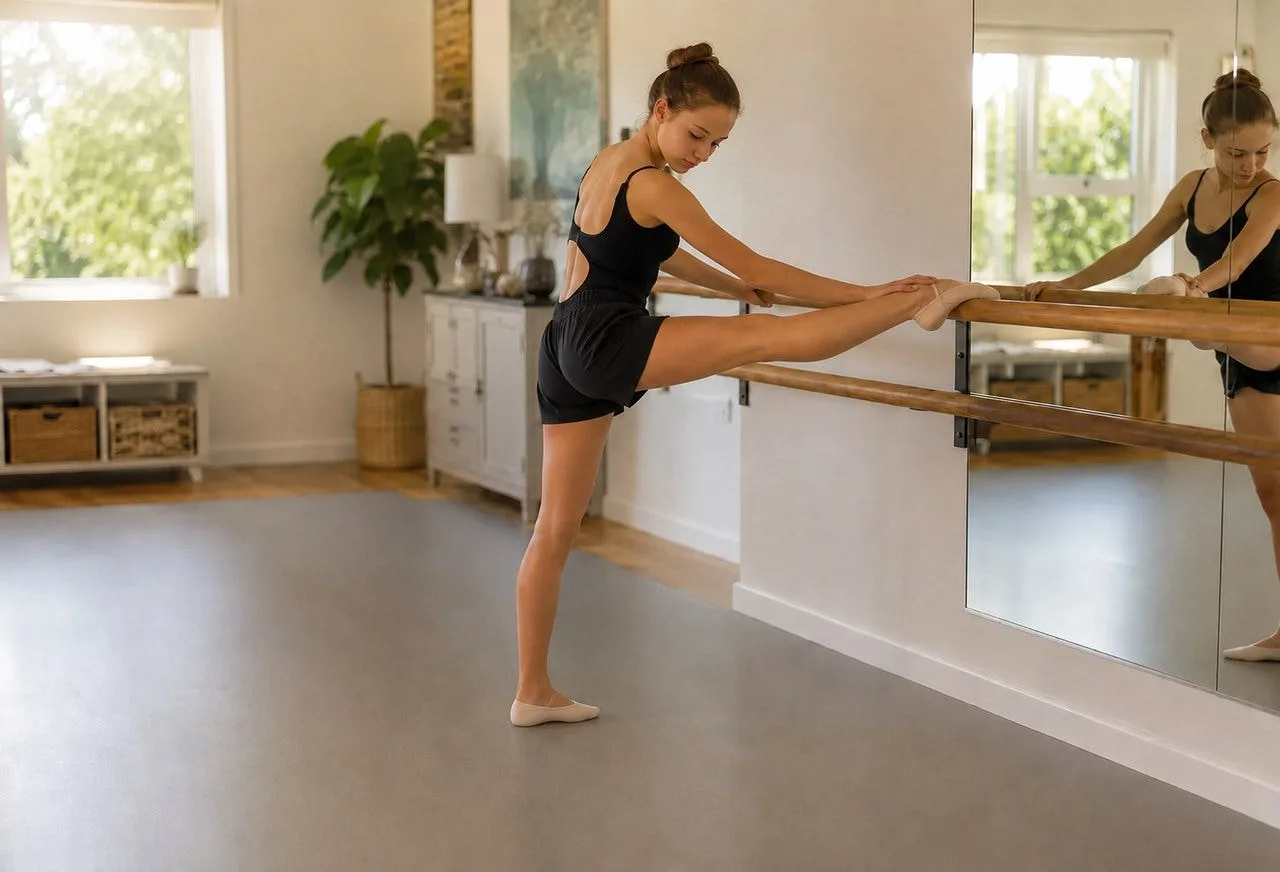
If you're a dancer, teacher, or choreographer who’s always on the go, portable Marley should be your go-to!
Available in a huge variety of sizes, portable Marley rolls are durable and convenient. They can be used at home, at your studio, or practically anywhere you get the urge to bust a move. Simply find the perfect size for your needs, then roll it out and start dancing!
Top-Rated Portable Marley Rolls
Marley Dance Flooring Subfloors
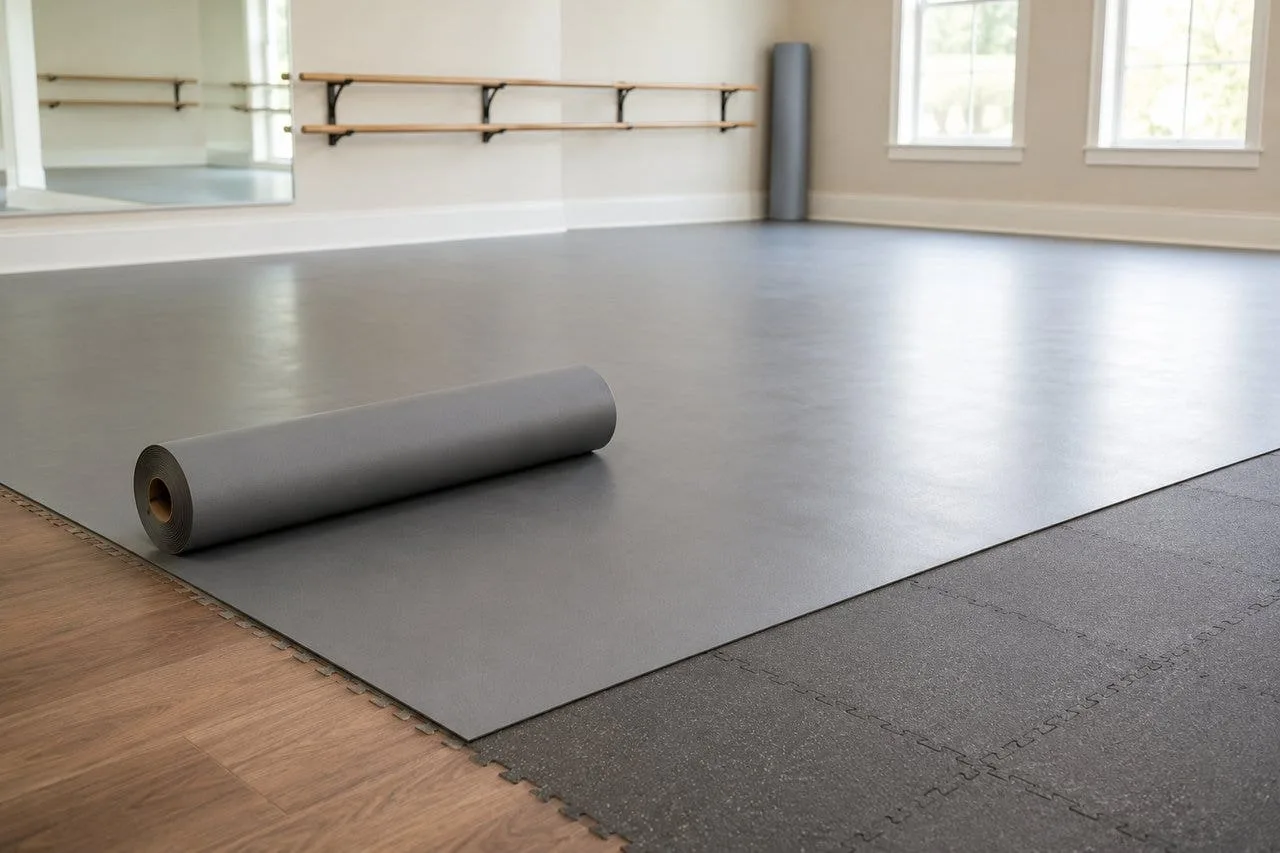
Whether you’re a studio, school, or professional company, the last thing you want is injured dancers. The best way to reduce the chance of injury is to start with a dance subfloor.
Subfloors absorb and distribute the dancer’s weight and create a sprung floor for the dancers. This allows dancers to continue to jump, leap, and roll with a lower risk of injury. Thankfully there are tons of great, supportive subfloors to go under your Marley floors. Just install your subfloor tiles over a clean, flat, level surface.
| Related Content >> Portable Dance Floor Buying Guide |
Marley Flooring Installation
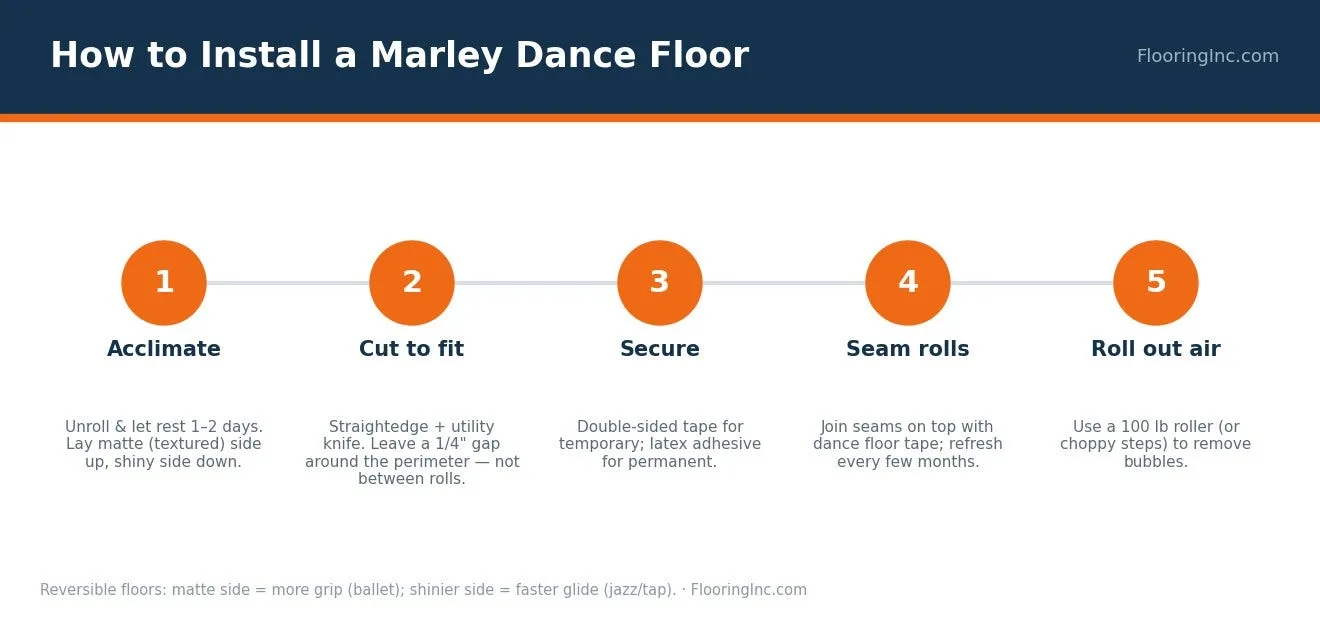
All Marley rolls install similarly. The main difference is the portability of your vinyl floor and if you’re doing a permanent, semi-permanent, or temporary installation.
Traditionally, you can easily install Marley dance rolls yourself by laying the rolls flat and using vinyl tape over the seams. However, there are few considerations for temporary and permanent installation methods. Let’s take a look.
Temporary Installation
- Unroll the flooring and let it rest for 1-2 days to allow it to relax until it lays flat. Install the shiny side down, matte side up.
- To make any cuts to the rolls, use a straightedge and a utility knife. Be sure to leave a 1/4″ gap around the rolls to account for expansion and contraction from temperature changes.
- On the underside of each roll, apply double-sided carpet tape around the perimeters, and firmly press the edges to the floor, ensuring there are no ripples.
- If you’re installing over foam subfloor tiles and you have excess around the edges, tape this perimeter down to your main floor using Mat Tape, creating a ramp or tapered installation. If you’re installing over foam tiles and there isn’t extra around the edges, tape down the perimeter of the roll directly to the subfloor tiles using Mat Tape.
- Use mat tape or dance floor tape on top of the flooring to join the seams of multiple rolls together.
Note: Over time, you may need to replace the tape as it gets worn down or torn from footwork. You should refresh the top tape every few months. The double-sided tape underneath can last for a couple of years.
Permanent Installation
When it comes to the permanent dance flooring, there are a few more steps to take to make sure that the floor stays put. This process requires glue to ensure excellent adhesion to the subfloor.
-
Spread out the rolls and allow them to relax for 1-2 days until they lay completely flat. Make sure the shiny side faces down, with the matte side up as the top is textured to provide a better grip while dancing.
-
Use a straightedge and a utility knife to cut the rolls to fit, and leave a 1/4″ gap to account for expansion and contraction.
-
Roll up the flooring at one end of the room. Spread a light layer of adhesive in 10’ increments or shorter depending on your comfort. Then gradually unroll the flooring into the adhesive.
-
Continue this step for every 10’ of the roll until you’re finished.
-
To push out any air bubble and to ensure good adherence, use a 100-pound roller on the floor. Walking on the flooring in small choppy steps may also work if you can’t find a roller.
Related Content >> Dance Studio Flooring Buying Guide
Marley Flooring Maintenance
The best way to combat outside dirt is to choose a dance floor that is easy to take care of. You’re going to have to end up cleaning it regularly, so you don’t want a floor that requires constant upkeep.
The good news is all of our Marley dance flooring options are super easy to clean and maintain. As long as messes are cleaned up promptly, Marley floors just require sweeping/vacuuming and a damp mop with a mild cleaning solution. Avoid steam mops, abrasive pads, and harsh solvents or bleach — they can dull or warp the vinyl. Stick to a damp mop and a marley-safe cleaner.
Not sure what flooring cleaner to use? We have a selection of all-purpose and heavy-duty dance floor cleaners to make it easy!
SHOP ALL-PURPOSE DANCE FLOOR CLEANER SHOP ALL HEAVY-DUTY DANCE FLOOR CLEANER
Marley Dance Flooring FAQ
What is marley flooring?
Marley is the dance world’s name for roll-out vinyl flooring with a controlled-slip surface: it gives dancers enough slide to turn and enough grip to land jumps safely. It started as a brand name and is now the generic term for vinyl dance rolls.
How much does marley dance flooring cost?
Roughly $2.40–$9.25 per square foot. Budget practice rolls start around $2.40/sq ft; professional studio rolls run $3.40–$4.45; heavy-duty wood-look rolls are about $9.25. Most are cut to order and priced per linear foot.
Is marley the same as vinyl flooring?
Essentially, yes. Marley is vinyl — specifically vinyl engineered with the grip-and-slide balance dancers need. The original Marley brand is gone, so “marley” now just means dance-grade vinyl roll.
What thickness of marley is best?
Thinner rolls (around 1.0–1.2 mm) are lighter and great for touring and budget setups; thicker rolls (1.5 mm and up) give more durability and a firmer feel for percussive styles. Pair any marley with a sprung subfloor for shock absorption.
Is marley good for tap?
Yes — choose a firmer, durable roll like Rosco Adagio or Adagio Tour, which give the hard, responsive surface and acoustics tap and percussive styles need.
Can you install marley over concrete?
Yes. Marley installs over a clean, flat surface, including concrete. For comfort and joint protection on hard subfloors, add a sprung dance subfloor underneath.
How do you clean a marley floor?
Sweep or vacuum regularly and damp-mop with a mild, marley-safe cleaner. Avoid harsh chemicals. Flooring Inc. carries all-purpose and heavy-duty dance floor cleaners made for vinyl.
Do you need rosin on a marley floor?
No. Marley is engineered with a controlled slip, so you don’t need rosin. If a brand-new roll feels slippery, that’s the factory mill film — damp-mop it with a marley-safe cleaner before the first class and it breaks in quickly.
What color marley should I choose?
Black is the most popular — it hides scuffs and tap marks and reads cleanly on stage. Grey shows up well under studio lighting. Several rolls are reversible (black/grey or black/white), so you can flip between a class side and a performance side with one floor.
Conclusion
Now that you have an idea of what you’re looking for in terms of Marley flooring, are you ready to find the right floor for you? Still torn between two rolls? Order free samples and feel the slip for yourself before you commit.
ORDER FREE SAMPLES SHOP ALL MARLEY
New: A Dedicated Home for Dance Flooring
Shopping just for marley? We’ve launched DanceFlooringInc.com — a new site dedicated entirely to dance floors, featuring the same VersaStep, ProStep, and Rosco marley rolls cut to your length. You can shop our full dance flooring selection right here at Flooring Inc., or visit the new site built specifically for dancers.